You have decided to look at sponge biofilm media — our NovusPore hydrophilic polyurethane (HPU) sponge — for your MBBR tank or your retrofit. You ask a supplier for a price, and the reply comes back with five questions: what tank, what fill, what water, what is in there now, and how much do you actually need? That is not the supplier stalling. Sponge media is not priced the way plastic carriers are, and a quotation built on guesses will not survive contact with your tank.
The buying problem is simple: two buyers who both write “I need sponge media” can need two completely different orders. One is filling a new tank. The other is topping up an existing bed where the old media is still in place. One runs a warm aquaculture loop; the other runs a cold industrial stream. The volume, the cube size, the packing, and the freight all change — and so does the price. Send the data below in your first message, and the quotation you get back will be one you can actually compare.
Why sponge media is quoted differently from plastic carriers
Plastic MBBR carriers are sold as a known quantity: a model number, a protected surface area, a bag of 0.1 m³. Our catalog figures, for example, run from over 650 m²/m³ for MBBR19 to over 1,600 m²/m³ for MBBR76, in 100% virgin HDPE with a density of 0.96–0.98. You can compare two plastic carriers largely on paper.
Sponge media does not work that way. A NovusPore cube is a piece of hydrophilic polyurethane foam, specified by protected surface area — over 5,000 m²/m³ — and by porosity over 98%, not by the same geometry as a plastic carrier. It is shipped vacuum-packed, and it expands about 1.7 times when the pack is opened. That changes two things a buyer must get right: how much to order, and what it costs to ship. A 40HQ container holds 500 m³ of vacuum-packed sponge, against 70 m³ of plastic carriers — a difference that can decide the landed cost more than the unit price does. None of that is visible in a one-line price request. It only becomes visible when the supplier knows your system.
For the technical side of the sponge-versus-plastic choice — how the two media behave in the same tank — see the comparison on our sister site: HPU sponge versus HDPE MBBR biofilm carrier selection. What follows here is the buying side: the data to send so the quotation matches your system.
The checklist: what to send for a quotation
1. Your tank: volume, shape, and what is in it now
Start with the tank itself. Give the working volume of the MBBR tank in cubic metres, not the total plant flow. A buyer who sends only the plant flow forces the supplier to guess the tank, and the guess is usually wrong. Add the tank shape — rectangular or round, and its depth — because depth affects how the media mixes and how it is loaded. Then say what is in the tank now: empty and new, running with plastic carriers you want to replace, or running with sponge you want to top up. If it is a replacement, name the existing media and say why you want to change it.
2. New fill, top-up, or retrofit
These are three different orders, and the supplier needs to know which one you are placing:
- New fill. The tank is empty. You need the full volume, and the quotation should state the fill ratio it is based on. Our catalog dosing range for MBBR media is 15–65% of tank volume — ask the supplier to state the ratio behind their volume, in writing.
- Top-up. The tank is running and you are adding media. Say how much is in there now, in cubic metres, and how much more you want.
- Retrofit. You are changing media type in an existing tank — the most common sponge inquiry we receive. Say what the tank was built for, what aeration and screens it has, and whether anything else is changing at the same time. A retrofit quotation should cover the media and confirm it fits the tank you already own.
3. Your water: what the media will live in
Sponge media is hydrophilic — it wets and holds water — but it still has to suit your stream. Tell the supplier whether the water is municipal, industrial, or aquaculture, and whether it is freshwater or seawater. Give the temperature range the tank runs at. If the stream carries anything unusual — high salinity swings, very cold intake, oil or grease, disinfection upstream of the biofilter — mention it in one line. A supplier who does not ask about the water is quoting a catalogue item, not a working fill.
4. Aeration and retention screens you already have
Sponge media only works if it stays in the tank and keeps moving. Tell the supplier what aeration the tank has — air supply and diffuser layout — and whether the tank mixes evenly today. Dead spots where media piles up are a property of the tank, and they affect which cube size will actually fluidise. Then describe your retention screens: mesh or slot size, material, and whether they are cylindrical or flat. Ask the supplier to confirm in writing that the sponge cubes they quote cannot pass through your screens. If you need new screens with the media, say so in the same request. Screens ordered later, as an afterthought, cost more and fit worse. Our retrofit shopping list covers the other items buyers usually forget in the same order.
5. Cube size, packing, and the volume question
Sponge media is ordered by volume, and volume is where misunderstandings happen. Ask the supplier to state three things in the quotation:
- Cube size and form. What size are the cubes, and are they supplied loose, bagged, or vacuum-packed? Cube size affects handling and how the media moves in your tank.
- Packed volume versus expanded volume. Vacuum-packed sponge expands about 1.7 times on unpacking. The quotation should say clearly whether the quoted volume is packed or expanded, so you are not comparing one supplier’s packed cubic metre with another’s expanded one.
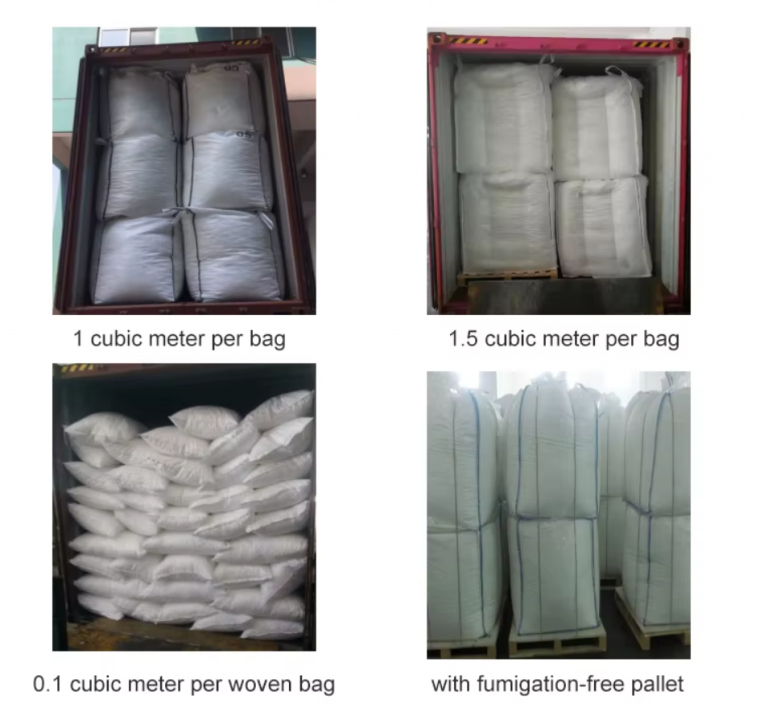
- Packing and freight basis. How is it packed for export, how many cubic metres fit a container, and what does the freight add? With 500 m³ of vacuum-packed sponge to a 40HQ, freight per cubic metre is far lower than for plastic carriers — but only if the quotation is built on the vacuum-packed volume. Ask for the freight basis in the quote, not as a separate email later.
6. Sample first, then the bulk order
Before you commit to a full fill, ask for a sample. A small sample lets you check the material, the cube size, the hydrophilic behaviour, and the packed-to-expanded volume with your own hands — and it lets you confirm the media fits your screens before a container is on the water. Tell the supplier how you want to test it and what you want the sample to prove: cube size against your screens, wetting behaviour, and handling. Our guide to testing a media sample before you order walks through what to check on MBBR and sponge samples before you commit. A supplier who will not send a sample is telling you something about how they work.
What a good quotation should state in writing
When the quotation comes back, check it against this list before you compare prices. A quotation that states all of these is comparable; one that states two of them is not:
- Media type and model, cube size, and material — hydrophilic polyurethane sponge, not a generic “bio media.”
- Protected surface area and the basis it was measured on, plus porosity, stated as figures, not adjectives.
- Volume quoted, and whether it is packed or expanded volume — with the expansion factor stated.
- Fill ratio the volume is based on, and the tank volume it was calculated from.
- Packing method, container loading, and the freight basis.
- Lead time from order confirmation, and payment terms.
- What the supplier needs from you to confirm the order — usually the tank data above, confirmed in writing.
If two quotations state different volumes, check the fill ratio and the packed-versus-expanded basis before you check the price. Most of the time, the cheaper quotation is quoting less media, or packed volume against expanded volume.
What to send HNS for a quotation
Send us the same checklist: tank working volume and shape, new fill / top-up / retrofit, water type and temperature range, aeration and screen details, and the volume you think you need — or the tank data and let us work out the volume. Add a photo of the tank and the screens if you have one; it answers three emails at once. Tell us whether you want a sample first, and where it should go. We manufacture the NovusPore sponge media and the MBBR carrier range at our own factory in Yixing, and we supply media and equipment packages — not whole-plant process design, civil works, commissioning, or operation. Send the checklist to our contact page, and we will come back with a quotation that states the volume, the basis, and the freight — so you can compare it line by line with any other offer.