
Aeration Systems: Disc, Tube and Coarse Bubble Diffusers — Selected by Tank and Duty
Aeration is usually the largest energy cost in a biological treatment plant, and the diffuser decision lasts a decade: the wrong format fouls, wastes blower power or leaves dead zones that no amount of air can fix. This page puts the three diffuser families side by side — and the membranes that decide how long any of them lasts — so you can pick by tank geometry and duty, not by habit.
≥38%
SOTE at 6 m submergence (disc)
215–350 mm
disc diffuser sizes
500–1,000 mm
tube diffuser lengths
5–10 years
membrane service life
THE SYMPTOMS
The symptoms that bring people here
Uneven bubbles across the tank. Blower pressure creeping up month after month at the same air flow. One corner boiling, another corner dead. These are diffuser problems, not blower problems — and they are the reason many plants pay to re-aerate a tank that was never laid out properly. Start with the selection table below; if your system is already installed, jump to the clean, re-membrane or replace section.
THE RANGE
The components
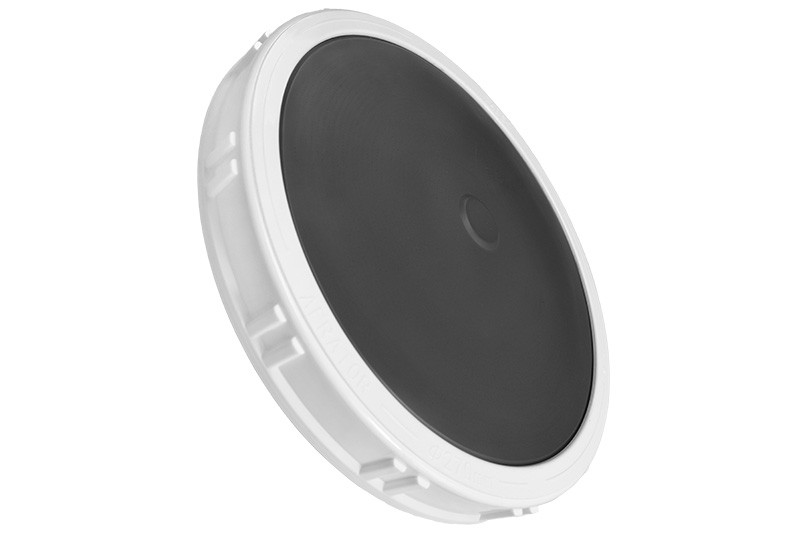
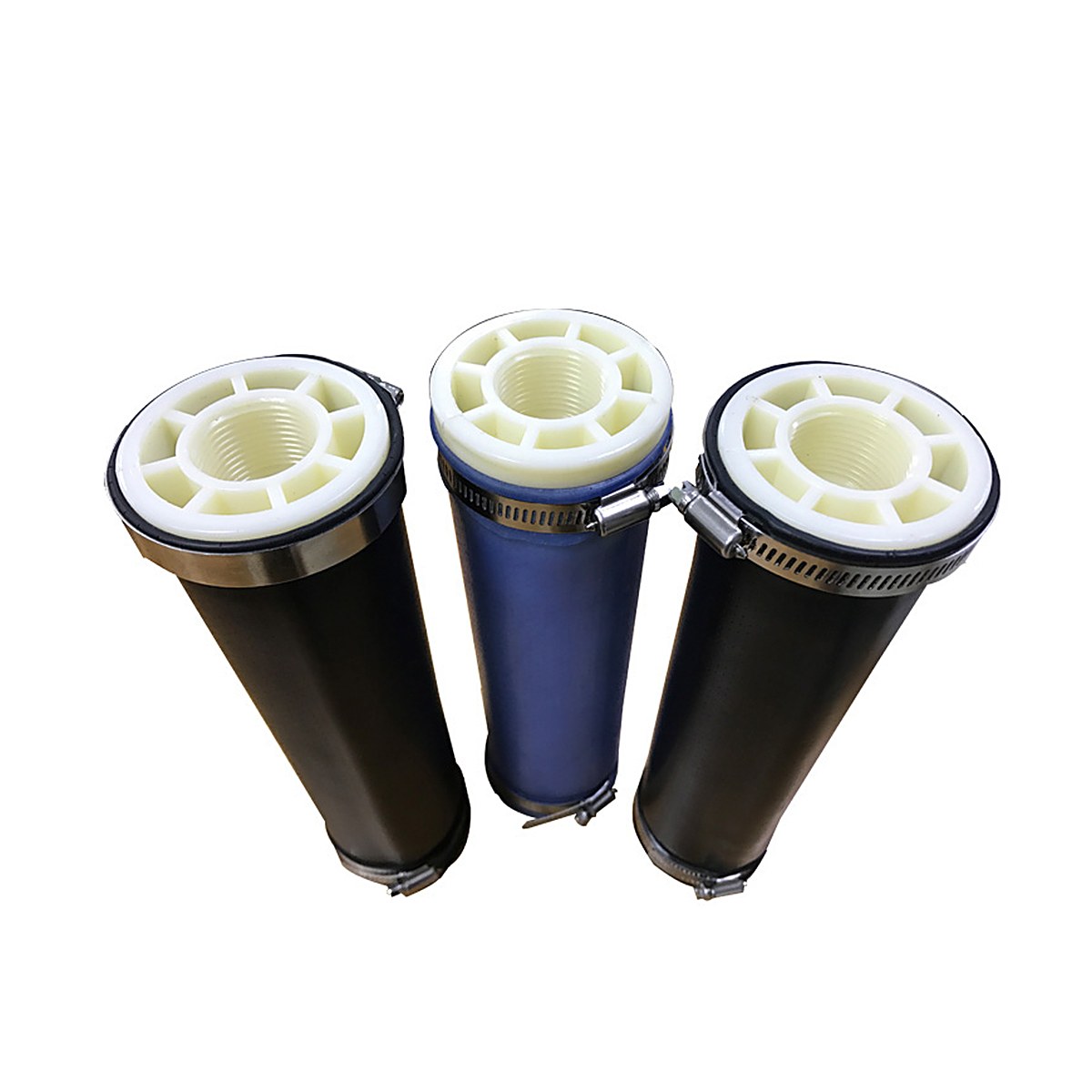
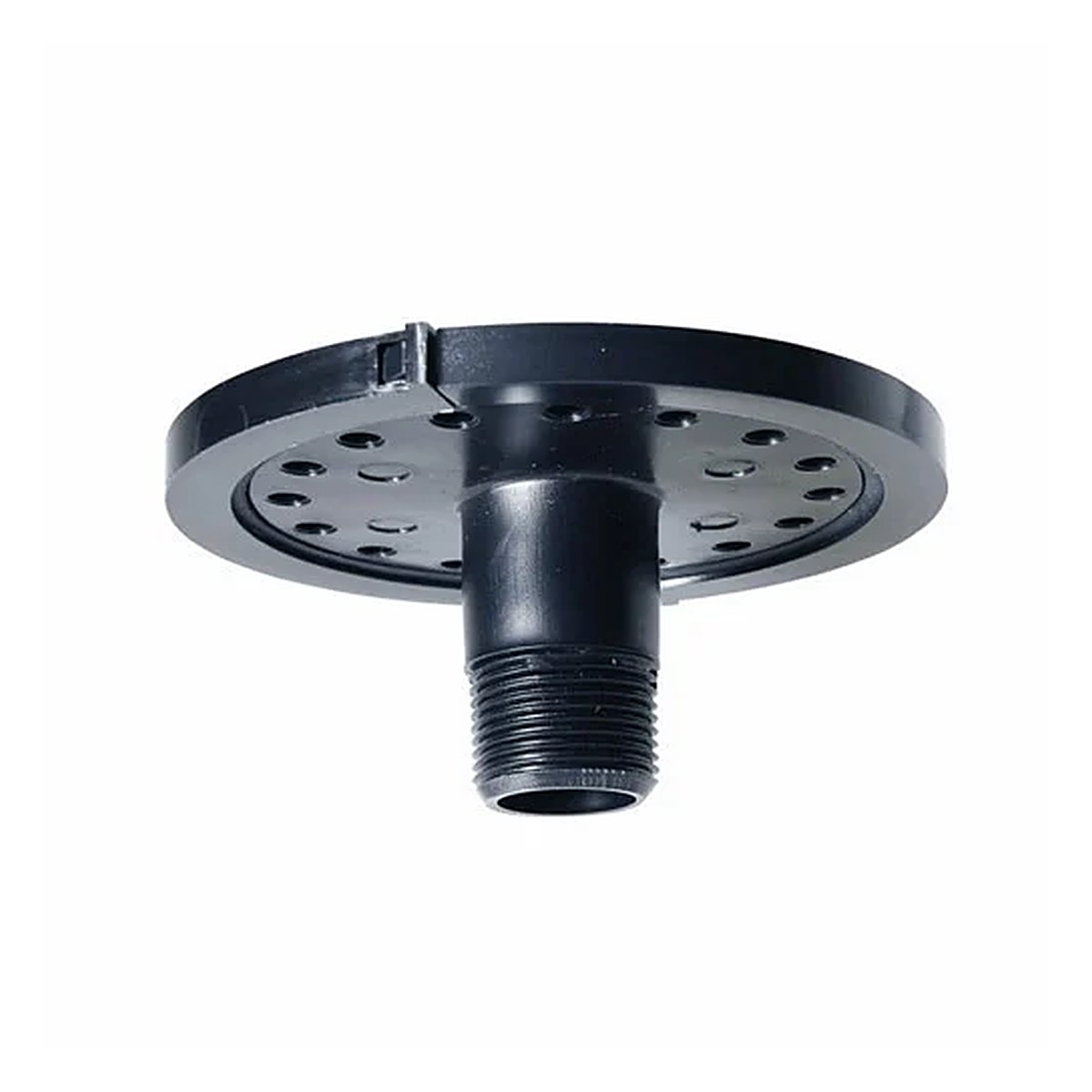
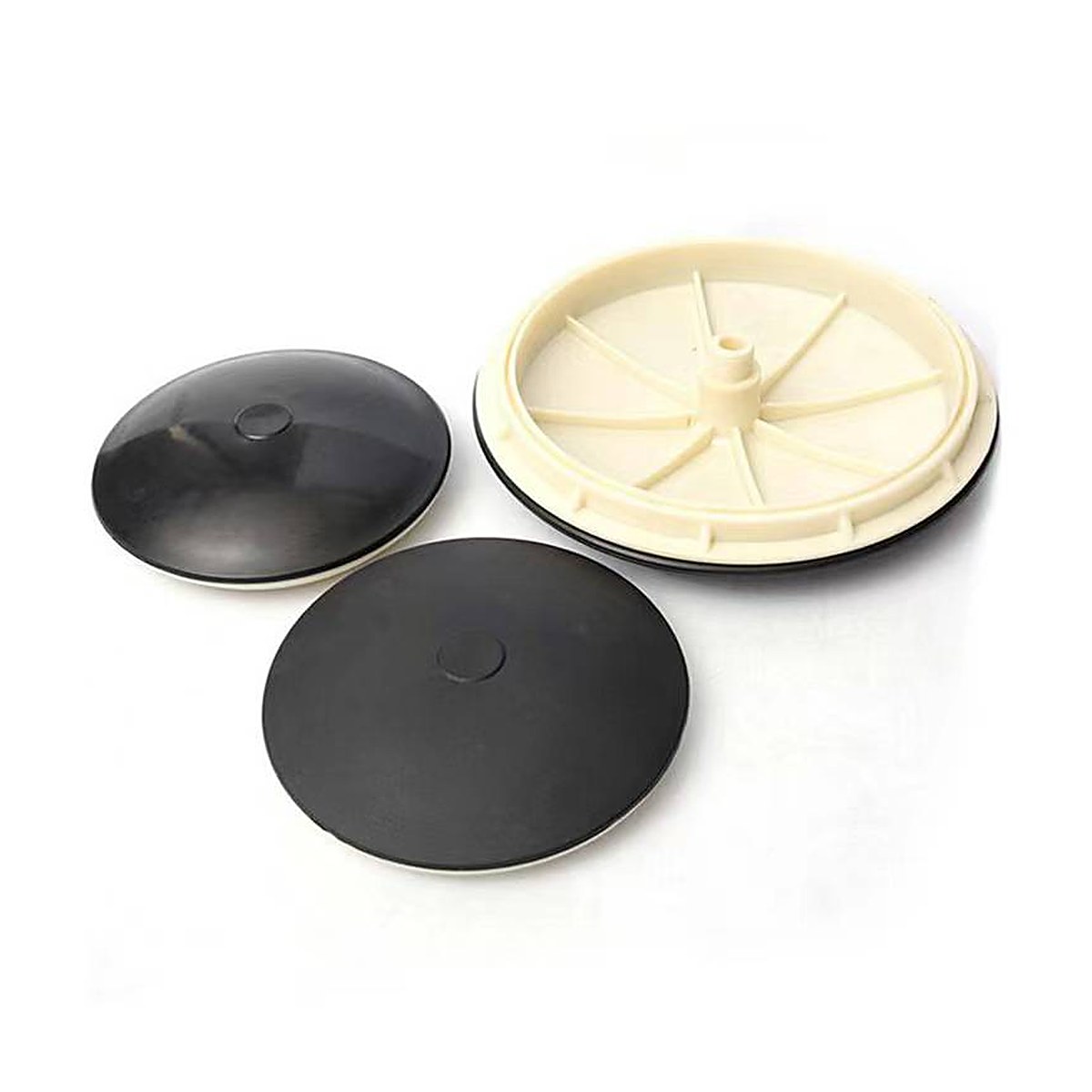
Send us your tank size, water depth and airflow — we lay out the grid and quote it as one package.
SELECTION
Selection table — which diffuser for which tank
| Your tank / duty | Choose | Why |
|---|---|---|
| Standard biological tank, any shape | Disc diffusers | Point-by-point layout, easy to match air distribution to the floor plan |
| Long, narrow tank or channel | Tube diffusers | A line of bubbles covers length better than a grid of points |
| Oxidation ditch | Tube diffusers | Continuous coverage along the channel |
| Grit chamber / equalisation / sludge holding | Coarse bubble | Openings pass grit and solids; mixing matters more than oxygen efficiency |
| High-temperature wastewater | Silicone membranes | Keeps elasticity where EPDM ages faster |
| Greasy or scaling wastewater | PTFE-coated membranes | Coated surface fouls more slowly and cleans more easily |
SERVICE LIFE
Membranes decide the service life
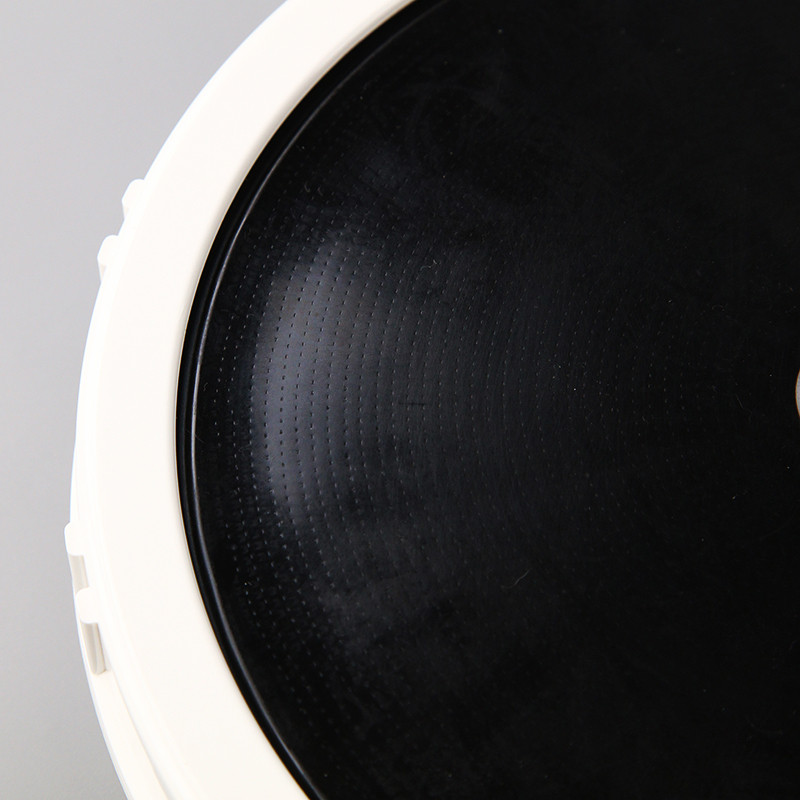
The diffuser body lasts; the membrane does the work and wears out. EPDM is the economical standard for municipal wastewater and lasts 5–10 years in normal duty. Silicone stays flexible in hot wastewater where EPDM stiffens, and PTFE-coated membranes resist fouling in greasy or scaling water — at a higher price. Match the membrane to the water, not the diffuser: the wrong membrane is the most common reason a good diffuser performs badly.
ALREADY INSTALLED
Already installed? Clean, re-membrane or replace
Work through it in this order: clean first (fouling is often surface scale, and our engineers’ troubleshooting guide walks through the checks); if bubbles stay uneven after cleaning, the membranes have stiffened or torn — re-membrane; replace the whole diffuser only when bodies or fittings are damaged. We will tell you honestly which step you are at if you send photos.
QUESTIONS
FAQ
At the same air flow the hardware cost is similar; the layout decides. Long tanks waste discs, compact tanks waste tubes. Send the tank drawing and we lay out the cheaper geometry.
It follows from your BOD/ammonia load and tank depth, not from tank volume alone. Send the load data and we calculate it.
Yes, and most plants should: fine bubble in biological tanks, coarse bubble where mixing and clogging are the risk.
Standard disc and tube sizes, often yes — send a photo with measurements and we confirm the fit before you order.
The membrane, by design. Bodies and fittings normally outlast two or three membrane cycles.