A buyer recently asked a simple question in a wastewater forum: he had two MBBR media datasheets, one quoting 500 m²/m³ and the other 350 m²/m³, and he wanted to know whether those assumptions were enough to choose between them. It is the right question — and the honest answer is no. Not because either number is wrong, but because the two numbers may not measure the same thing.
A datasheet surface-area figure is only comparable when you know what it counts. One supplier’s 500 m²/m³ may count every square millimetre of plastic, including surfaces where biofilm cannot survive. Another supplier’s 350 m²/m³ may count only the protected area where biofilm actually grows. The lower number can be the better media — and the buyer who picks the higher number has bought a bigger figure, not a better carrier.
This article is a buyer’s guide to reading the datasheet, not a product comparison. It explains the three traps in the surface-area number, the five lines to demand in writing, and how to make two quotations comparable before you spend anything.
Trap 1: Total Surface Area Is Not the Area That Works
Every MBBR carrier has two surface areas, and a datasheet usually prints only one of them without saying which. The first is the total surface area: all the plastic surface on the carrier, inside and out. The second is the protected surface area: the surface inside the carrier’s structure that is shielded from collisions with other carriers — the area where biofilm can grow undisturbed and stay attached.
Only the protected area does the steady work. The exposed outer surfaces get scoured every time carriers collide, so biofilm there is thin and temporary. A carrier shaped like a simple ring can have a large total area and a small protected area. A carrier with deep internal fins can have a smaller total area and a larger protected one. That is why the forum poster’s question has no answer from the numbers alone: 500 m²/m³ of total area and 350 m²/m³ of protected area are not two points on one scale. They are two different measurements that happen to share a unit.
What to do: ask every supplier, in writing, whether the surface area on their datasheet is total or protected — and ask them to state it on the quotation, not only on the datasheet. A supplier who will not state the basis is telling you something. Our supplier-vetting guide lists this among the questions that separate a manufacturer from a reseller: How to Vet an MBBR Media Supplier: 8 Questions to Ask Before You Order.
Trap 2: The Number Has No Test Method Behind It
Even two “protected surface area” figures can disagree, because there is no single standard test that every supplier uses. Some calculate the area from the carrier’s geometry. Some measure it. Some quote a figure inherited from a catalogue that nobody has re-checked. A buyer cannot audit the calculation from a PDF — but a buyer can ask what stands behind the number.
Ask for the basis in one sentence: how the figure was determined, and whether it is a calculated or measured value. Then ask for the rest of the datasheet to be complete. A surface-area number sitting alone on a one-page datasheet, with no material, no size, and no density, is a marketing number. A surface-area number on a datasheet that also states the material, the dimensions, the density, and the dosing range is a specification — because each of those lines can be checked against the sample you receive.
The check that costs you nothing is the sample. Order a small sample before committing, and check the size, the material, and the finish against the datasheet. Our sample guide explains exactly what to look for: Testing a Media Sample: What to Check on MBBR and Sponge Samples Before You Commit. If the sample’s dimensions do not match the datasheet, the surface-area figure is not the only number you should distrust.
Trap 3: Comparing Two Media by One Number Ignores the Rest of the Purchase
Surface area decides nothing on its own. Two carriers with the same protected area can differ in material, in weight, in how they move in the tank, and in how much of the tank volume they need. A buyer who chooses on surface area alone is choosing a specification sheet, not a system.
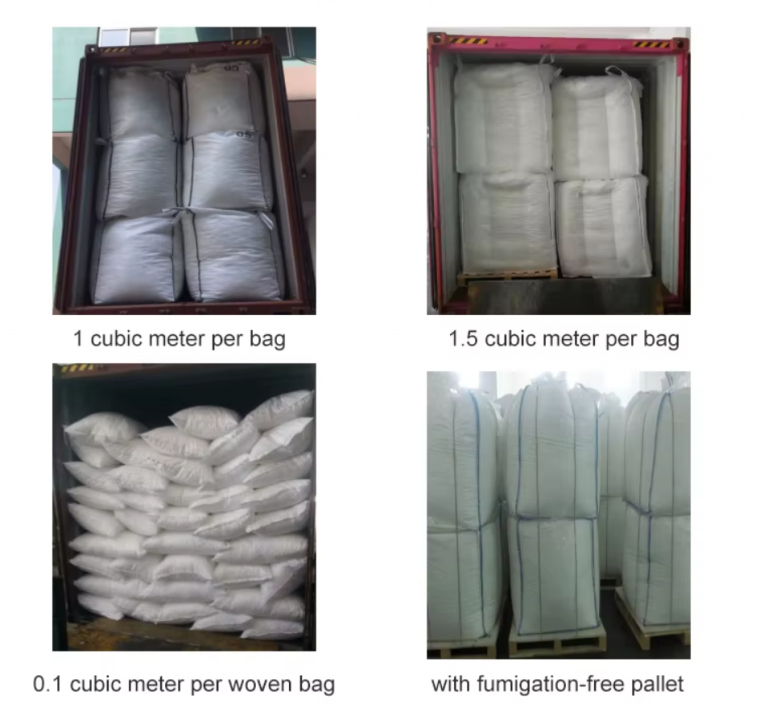
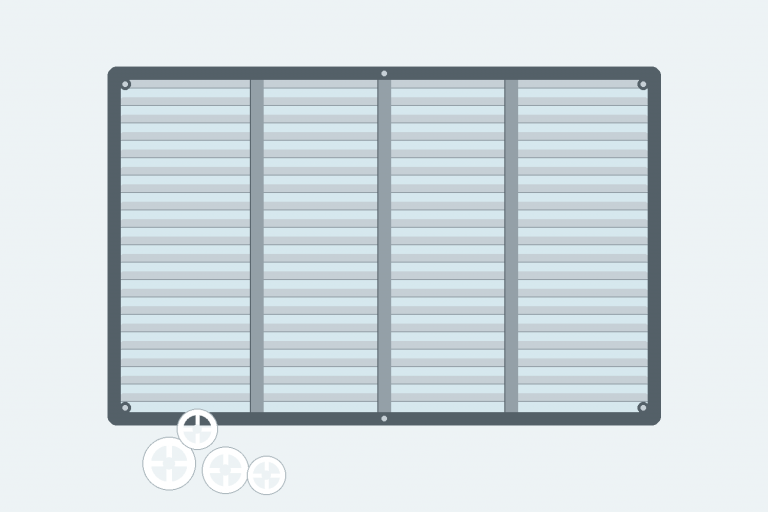
The lines that matter alongside the surface area are the ones that decide whether the media will last and whether it will move. Material: virgin HDPE, not recycled, because recycled material changes density and brittleness. Density: close to water, so the carrier stays suspended rather than sinking or floating. Size and shape: the dimensions that decide whether the media passes through your retention screens. Dosing range: the fill percentage the supplier recommends for the tank. Packing: how the media is bagged and how many cubic metres fit a container, because that decides your freight cost per cubic metre.
Our own catalogue states all of these together, and that is the standard to hold every supplier to. As an example of what a complete, stated-basis specification looks like, the HNS MBBR range is 100% virgin HDPE with a density of 0.96–0.98 and a recommended dosing range of 15–65%, packed at 0.1 m³ per bag. The verified surface areas in the catalogue are: MBBR19 above 650, MBBR37 above 800, MBBR64 above 1,200, MBBR76 above 1,600, MBBR40 above 900, MBBR04 above 900, MBBR05 above 1,000, and MBBR06 above 800 m²/m³. Note what is missing from that list: two models have no verified surface-area figure in the catalogue, and we do not state one for them. A supplier that prints a figure for every model, including the ones it has never measured, is not being thorough — it is filling in blanks.
The Five Lines to Demand in Every Quotation
Before you compare two quotations, make both suppliers answer the same five lines in writing. If a quotation does not contain them, send it back — an incomplete quotation is not a lower price, it is an unpriced risk.
| # | Demand in writing | Why it matters |
|---|---|---|
| 1 | Surface area, stating total or protected | Without the basis, two numbers cannot be compared |
| 2 | Material and density | Virgin HDPE and near-water density decide lifespan and movement |
| 3 | Dimensions and shape | Decides whether the media fits your screens and tank |
| 4 | Recommended dosing range | Decides how many cubic metres you actually need to buy |
| 5 | Packing and container load | Decides your freight cost per cubic metre |
With those five lines, the comparison becomes honest. You can see whether the cheaper quotation is cheaper because the media is cheaper — or because it quotes a larger surface-area number measured on a different basis, a thinner material, or a packing size that wastes container space. Our quotation guide covers the five numbers that decide the price itself: Before You Ask for an MBBR Quotation: The 5 Numbers That Decide Your Price.
For the technical side — how surface area is actually used once you understand the basis — our technical site covers media selection in depth: MBBR media selection: surface area. Read the datasheet first, then the selection guide; the order matters, because a selection calculation built on an unstated basis is precise and wrong.
What to Send HNS for a Quotation
If you want a quotation from HNS, send the same five lines you would demand from anyone else — and add the two numbers that let us quote against your tank rather than a catalogue page. Send your tank volume and your retention screen opening, your current media model if you are replacing media, the quantity in cubic metres, and your delivery destination. We will confirm the model, the surface-area basis, the material, and the packing in the quotation itself, so you can compare it line for line with any other supplier’s. Our MBBR media is manufactured at our own factory in Yixing, and the product page lists the range: MBBR Media.
The Point of the Datasheet
The forum poster who asked whether 500 and 350 m²/m³ were enough to choose was asking the wrong question in the right spirit. The numbers are not enough — not because they are small, but because they are unlabelled. Demand the basis, demand the five lines, and check the sample against the datasheet. The supplier who answers all five in writing is the supplier whose numbers you can trust. The one who answers with a bigger number and no basis has told you everything you need to know.
Talk to HNS about your media choice — send your tank volume, screen opening, and quantity, and we will quote with the surface-area basis stated in writing. Contact HNS Watertech.