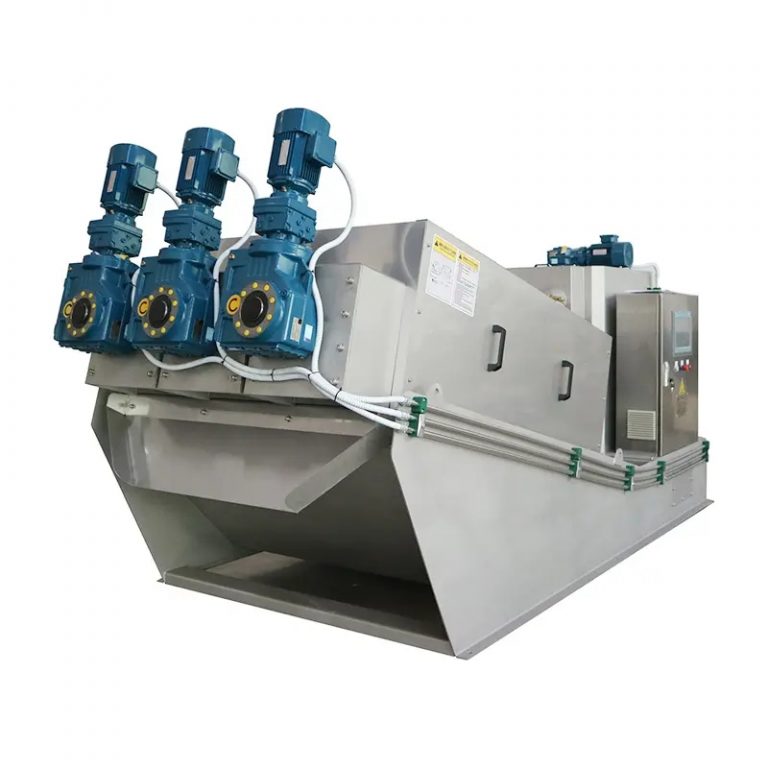
Media is easy to ship: it pours into bags, bags stack into a container, and freight follows volume. Equipment is different — and buyers who learned shipping on a media order are often surprised by their first equipment shipment.
A dissolved air flotation unit, a screw press or a rotary drum filter is heavy, rigid, awkwardly shaped and full of parts that do not like being dropped, soaked or bent. It needs a crate or steel frame, lifting points, moisture protection and a container plan that accounts for weight and shape, not just volume — and freight follows the container count, the weight, the port pair and the delivery term, which is why the term deserves the same attention as the equipment price.
This article is the buyer’s checklist for the shipping half of an equipment order: crating, containers, delivery term, offloading, insurance and documents. Agree them in writing and the shipment is routine; leave them vague and it becomes the most expensive surprise in the project.
The buying problem: the equipment price is not the landed cost
A quotation for a screw press or a DAF unit usually shows an equipment price and a delivery term — two letters and a port name. Everything between the factory gate and your site sits inside those two letters, and buyers who do not read them end up paying twice: once in the price they thought covered delivery, and again to the forwarder or the crane company.
The pattern is familiar: a buyer pays the deposit, then discovers the price was ex-works and the freight is theirs to arrange — or that it covered freight to the port but not customs clearance, haulage to the site, or the crane to lift the unit off the truck. None of this is a reason to avoid ordering equipment from China — only to treat shipping as part of the purchase decision, agreed with the price, with the same supplier, in the same document.
What actually decides it: five shipping decisions
1. The delivery term — who pays for what
The delivery term is the most important shipping line on your quotation, and usually the least discussed. Four terms cover most wastewater equipment orders:
- EXW (Ex Works): you collect from the factory and arrange transport, export clearance, freight and insurance. Cheapest headline price, most work for you.
- FOB (Free on Board): the supplier loads the goods onto the vessel at the named port and handles export clearance; you pay freight and insurance from there.
- CIF (Cost, Insurance and Freight): the supplier pays freight and insurance to your destination port; you handle import clearance and duties.
- DAP (Delivered at Place): the supplier delivers to your named place, often your site; you handle import clearance and duties.
No term is best in general: FOB suits a buyer with a trusted forwarder, CIF one who wants a single price to the port, DAP one who wants the supplier to carry transport risk as far as possible. What matters is that the term and the port or place are named and both sides agree what is included up to that point — “delivery included” without a term is not an agreement. Also agree who insures the cargo, for what value, and ask for the certificate before shipment.
2. Crating and protection — the part that decides whether it arrives working
Media ships in bags; equipment ships in crates, on skids or in steel frames, and the packing decides whether the unit arrives working. Before you pay, agree the packing type (seaworthy crate, steel frame or open skid) and whether the price includes it; moisture protection (wrapping, sealed openings, desiccant — panels and motors suffer most from damp); lifting (lugs, fork pockets, gross weight and lifting method per crate); fragile items (instruments, membranes and sight glasses removed, packed separately and labelled); and marking (order number, crate number, weight and handling marks per crate).
Ask for photographs of the packing before the container is sealed — a supplier who packs well is glad to show it. Our guide to payment, warranty and inspection terms explains how to tie these to your payment milestones: Payment Terms, Warranty and Inspection: What to Put in Your Equipment Order.
3. Container planning — weight, shape and count, not just volume
This is where equipment shipping differs most from media shipping. Media freight is a volume calculation: MBBR media loads about 70 cubic metres into a 40HQ container, vacuum-compressed sponge media about 500 — hence the very different freight cost per cubic metre. Equipment does not work that way: a DAF unit or a screw press fills a container by weight and shape long before volume, and some units do not fit a standard container.
Agree before the deposit: container count and type, and whether any item ships out-of-gauge or flat-rack (priced and booked differently — know before the price is fixed); weight per crate, so your site team can confirm lifting capacity; the loading plan; and the freight basis (per container, per shipment or lump sum) and whether the quoted freight is firm, and until when.
If your order mixes media and equipment, keep the two freight calculations separate — our media freight guide explains the volume logic: Why Freight Decides Your Media Cost: MBBR vs Sponge, Container by Container. Equipment freight needs its own line.
4. Offloading and site delivery — the last mile is yours to plan
The last mile is where most equipment shipments lose a day and gain a bill. Before the shipment leaves, confirm who unloads (“delivered to site” does not automatically mean “unloaded at site”); what lifting equipment is needed (matched to the heaviest crate, not the average); where crates are stored (covered and dry — electrical items and membranes should not sit in the rain); and who checks the cargo on arrival (inspect and record visible damage before signing the delivery note, with photographs — a claim without a delivery-note remark is hard to make).
5. Documents that travel with the cargo
Without its documents, a shipment waits at the port. Agree the list before payment and ask for copies before the vessel sails: commercial invoice and packing list (weights and crate numbers matching the cargo); bill of lading and the forwarder’s details; certificate of origin if your customs requires it; manuals, drawings and the spares list — with the cargo and, where possible, in advance by email; and the inspection or test certificates agreed in the order. Customs requirements differ by country: ask your forwarder or broker before the order is placed — not when the container is already at your port.
The checklist: agree these before you pay
| # | Item to agree | What “done” looks like |
|---|---|---|
| 1 | Delivery term | Named term (EXW, FOB, CIF or DAP) with port or place named |
| 2 | Freight price and validity | Quoted per shipment, firm until a stated date |
| 3 | Insurance | Who insures, to what value, certificate before shipment |
| 4 | Packing type and cost | Seaworthy crate or frame, included or separately priced |
| 5 | Moisture and transit protection | Wrapping, sealing, desiccant agreed |
| 6 | Lifting points and crate weights | Gross weight per crate, lifting method |
| 7 | Container count and type | Number and type agreed; out-of-gauge flagged if any |
| 8 | Loading plan | Which items in which container, agreed in advance |
| 9 | Packing photographs | Agreed before shipment |
| 10 | Offloading at destination | Who unloads, with what equipment, in writing |
| 11 | Storage on arrival | Covered, dry storage confirmed for sensitive items |
| 12 | Delivery inspection | Damage check and photographs before signing |
| 13 | Shipping documents | Invoice, packing list, bill of lading, certificates agreed |
| 14 | Import clearance and duties | Named as buyer’s or supplier’s responsibility |
| 15 | Spare parts shipment | Spares travel with the order, not after it |
What to send HNS for a quotation
If you are asking HNS for an equipment quotation, send the following and we will quote equipment and shipping on the same document, so the landed cost is visible before you decide:
- The equipment you need — DAF unit, screw press, rotary drum filter, aeration package or biofilm media — and the duty it must meet. Our MBBR quotation checklist shows the detail that makes a quotation comparable.
- Delivery destination (port or site) and your preferred delivery term — or ask for a price to your port and we will quote CIF.
- Site constraints: crane or forklift capacity, access for a container truck, and covered storage.
- Whether you need a factory acceptance test before shipment, and packing photographs before the container is sealed.
- Your target delivery date, so we can confirm production and sailing.
HNS manufactures its media and equipment at its own factory in Yixing, and we pack, crate and load our own shipments — so the shipping answers come from the people who built the unit. That is the standard this checklist asks of every supplier, and the one we hold ourselves to.
The bottom line
Equipment shipping is not an afterthought to the equipment price. The delivery term, crating, container plan, offloading and documents are all part of the purchase, cheapest and easiest to agree before the deposit — when you still have leverage. Get them in writing with the price, and the shipment becomes what it should be: the routine final step of a well-bought order.
Contact HNS with your equipment list and delivery destination, and we will send a quotation showing equipment price and shipping terms together.