
Wastewater Aeration Systems for MBBR and Biological Treatment
EnquiryContact us to get !
- Free design suggestions
- Product Technical details
- Full product catalog
A wastewater aeration system has to do more than put bubbles into a tank. It must deliver the oxygen required by the biological process, distribute air across the basin and maintain the mixing needed under normal and peak operating conditions.
That is why diffuser selection should not begin with tank volume alone.
HNS supplies fine-bubble disc diffusers, fine-bubble tube diffusers, replaceable membranes, mounting components and air-distribution accessories for new wastewater plants and retrofit projects. We also support preliminary diffuser layout and blower matching when the design basis is available.
Typical applications include:
- MBBR and IFAS reactors;
- conventional activated-sludge systems;
- SBR and packaged biological treatment plants;
- municipal sewage treatment;
- food, beverage, textile, pulp and paper, and other industrial wastewater;
- existing aeration-system replacement or capacity upgrades.
Planning an aeration project?
Send the tank dimensions, water depth, biological process, wastewater characteristics, oxygen or airflow requirement, and available blower data. HNS will review the suitable diffuser type and supply scope.
Request Aeration System Review
Select the Aeration System by Process Duty
The same diffuser is not automatically suitable for every biological tank. The first selection should be based on what the aeration system must accomplish.
| Process duty | Main design question | Items that normally need review |
|---|---|---|
| Carbon removal | How much oxygen is required at average and peak organic load? | BOD/COD load, wastewater temperature, operating hours, target DO and peak factor |
| Nitrification | Can the system maintain oxygen transfer under the required ammonia load and minimum temperature? | NH₄-N load, alkalinity, temperature, DO target and design margin |
| MBBR or IFAS | Can the system provide both process oxygen and effective carrier movement? | Media type, filling ratio, tank geometry, water depth, retention screens and airflow distribution |
| SBR | Can airflow follow the fill, react, settle and decant cycle? | Cycle times, peak oxygen demand, blower turndown, diffuser air-on/air-off operation and controls |
| Equalisation or mixing | Is oxygen transfer the priority, or is solids suspension and mixing more important? | Tank contents, solids concentration, minimum mixing airflow and fouling risk |
| Retrofit or replacement | Can the new diffuser work with the existing piping and blower? | Existing connection, header size, operating pressure, blower curve, grid condition and access restrictions |
For a useful quotation, the process duty and the supply boundary should be stated clearly. A diffuser-only quotation, a complete grid package and a blower-plus-diffuser system are different scopes.
Fine-Bubble Disc Diffusers
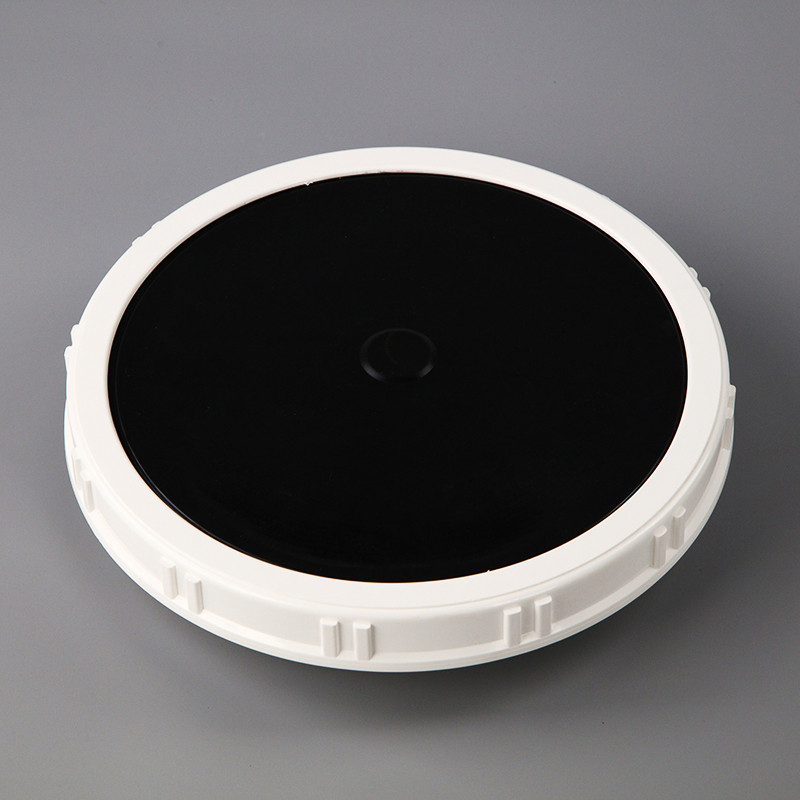
Disc diffusers are commonly installed on fixed aeration grids in municipal and industrial biological tanks. Their compact footprint gives the designer flexibility to adjust diffuser density and air distribution across different parts of the basin.
HNS disc diffuser options include nominal diameters of 215 mm, 270 mm and 350 mm. Available membrane configurations may include EPDM, PTFE-coated EPDM and silicone, subject to the wastewater characteristics and the confirmed product specification.
HNS Disc Diffuser Range
| Model | Nominal diameter | Available membrane options* | Typical selection consideration |
| HNS-DD215 | 215 mm | EPDM / PTFE-coated EPDM / silicone | Compact tanks, retrofit layouts and applications requiring more diffuser-position flexibility |
| HNS-DD270 | 270 mm | EPDM / PTFE-coated EPDM / silicone | General municipal and industrial biological treatment projects |
| HNS-DD350 | 350 mm | EPDM / PTFE-coated EPDM / silicone | Larger floor coverage per diffuser where the tank layout and airflow range are suitable |
*Final membrane availability and operating range should be confirmed against the latest HNS technical data sheet.
A larger disc does not automatically produce a better aeration system. Diffuser count, active area, airflow per unit, pressure loss, grid coverage and maintenance access must be considered together.
Fine-Bubble Tube Diffusers
Tube diffusers provide a long active membrane area and can be mounted singly or in pairs on air-distribution pipes. They are often considered for rectangular tanks, packaged plants and layouts where the designer wants to cover a wider area with fewer mounting points.
HNS tube diffuser options include nominal diameters of 63 mm, 93 mm and 113 mm, with common length options of 500 mm, 750 mm and 1,000 mm. The final model and length should be selected from the required airflow, tank geometry, pipe arrangement and maintenance method—not diameter alone.
HNS Tube Diffuser Range
| Model | Nominal diameter | Common length options | Available membrane options* |
| HNS-TD63 | 63 mm | 500 / 750 / 1,000 mm | EPDM / silicone; other configurations subject to confirmation |
| HNS-TD93 | 93 mm | 500 / 750 / 1,000 mm | EPDM / silicone; other configurations subject to confirmation |
| HNS-TD113 | 113 mm | 500 / 750 / 1,000 mm | EPDM / silicone; other configurations subject to confirmation |
*Airflow range, connection type and membrane perforation must be confirmed for the selected diameter and length.
The support tube, membrane, clamp or end connection, saddle and air pipe must be compatible as one assembly. Replacing only one component without checking the connection and operating pressure can create leakage or uneven air distribution.
Disc Diffusers vs. Tube Diffusers
Neither type is universally better. The right choice depends on the basin and the required aeration duty.
| Selection point | Disc diffuser | Tube diffuser |
| Layout flexibility | Individual positions can be distributed across the basin and adjusted for zoning | Long active area can cover more space from each pipe connection |
| Typical grid arrangement | Commonly installed across fixed floor grids | Mounted singly or in pairs on lateral pipes |
| Irregular or compact tanks | Often offers more flexibility in diffuser placement | Possible, but tube length and orientation must suit the available space |
| Number of mounting points | May require more individual mounting points | May reduce the number of mounting points, depending on the selected length and layout |
| Membrane replacement | Individual disc or membrane can be replaced | Membrane or complete tube assembly can be replaced, depending on construction |
| MBBR use | Suitable when layout provides both oxygen transfer and carrier movement | Suitable when airflow distribution and media movement are verified for the tank geometry |
| Final decision | Based on required airflow, diffuser density, pressure loss, access and lifecycle cost | Based on required airflow, active length, pipe layout, pressure loss, access and lifecycle cost |
Do not compare the two options only by unit price. A meaningful comparison includes the total number of diffusers, air grid, supports, installation work, blower pressure, maintenance access and expected replacement requirements.
EPDM, PTFE-Coated EPDM or Silicone?
Membrane material affects flexibility, chemical compatibility, fouling behavior, operating temperature and maintenance. The wastewater composition matters more than a general statement that one material is “best.”
| Membrane option | Often considered for | Points to confirm before selection |
| EPDM | General municipal sewage and many conventional biological-treatment applications | Wastewater temperature, oil and solvent exposure, scaling tendency and expected cleaning method |
| PTFE-coated EPDM | Industrial applications where fouling resistance or contact with fats, oils or selected chemicals is a concern | Actual chemical composition, coating specification, cleanability and compatibility with the wastewater |
| Silicone | Applications requiring a different temperature or chemical-resistance profile from standard EPDM | Tear resistance, pressure range, wastewater chemistry and long-term operating conditions |
A coating or special membrane formulation does not eliminate the need for maintenance. Diffuser performance can still be affected by biological growth, mineral scaling, solids deposition, chemical exposure and operation outside the intended airflow range.
For industrial wastewater, send a recent water analysis and identify oils, solvents, surfactants, cleaning chemicals, salinity or unusual temperature conditions before confirming the membrane.
Clean-Water Performance Is Not Field Performance
Oxygen-transfer figures are useful only when the test conditions are stated.
A supplier’s clean-water result should identify, where applicable:
- water depth or diffuser submergence;
- airflow per diffuser;
- diffuser density and grid coverage;
- water temperature and test method;
- standard oxygen transfer rate or efficiency;
- pressure loss at the stated airflow;
- whether the result is for a new diffuser in clean water.
Wastewater conditions can reduce actual oxygen-transfer performance. The correction from standard clean-water performance to field conditions may be affected by wastewater composition, surfactants, solids, salinity, temperature, fouling and the biological process. The U.S. EPA’s fine-pore aeration guidance also notes that wastewater constituents and diffuser layout influence oxygen-transfer performance and alpha factors.
For this reason, HNS does not recommend using a single oxygen-transfer percentage for every tank. Performance should be reviewed at the intended airflow, water depth, grid density and wastewater condition.
Aeration for MBBR and IFAS Reactors
An aerobic MBBR aeration system normally has two duties:
- supply the oxygen required for carbon removal or nitrification; and
- keep the biofilm carriers moving through the reactor without persistent dead zones or media accumulation.
These duties are related but not identical. A system may provide enough air for mixing while still falling short of the process oxygen requirement. It may also provide a calculated oxygen quantity but distribute the air poorly, leaving part of the media bed under-mixed.
MBBR aeration selection should therefore consider:
- carrier type, density and filling ratio;
- reactor length, width and operating water depth;
- organic and ammonia load;
- required dissolved oxygen;
- diffuser type, quantity and position;
- media-retention screen position and headloss;
- inlet, outlet, baffles and internal recycle;
- minimum airflow for carrier movement;
- peak airflow for biological demand;
- blower turndown and control method.
Adding more media or increasing airflow is not automatically a solution. Media quantity, oxygen transfer, mixing, screen capacity and downstream solids separation should be checked as one process.
For a broader budget discussion, see the MBBR System Cost: Pricing Factors and Budget Guide.
What Determines an Aeration-System Layout?
Required Oxygen and Airflow
The starting point is the actual oxygen requirement at design load. For biological treatment, this may include oxygen for biodegradable carbon removal, nitrification and endogenous respiration. The calculation should also consider peak load, temperature, elevation and the selected field correction factors.
Tank Geometry and Water Depth
Tank length, width, operating water depth, floor slope, internal columns and access points affect diffuser spacing and header arrangement. Water depth also affects both oxygen-transfer opportunity and blower discharge pressure.
Air Distribution and Pressure Loss
The header, lateral pipes, valves, fittings and diffusers must distribute air without unacceptable imbalance. The blower selection should include static water pressure, diffuser headloss, pipe and fitting losses, operating margin and required turndown.
Mixing and Process Stability
The minimum operating airflow must be checked as well as the peak. At low process load, reducing blower output may save energy, but airflow must remain sufficient for mixing, air distribution and stable diffuser operation.
Maintenance Access
The layout should allow realistic inspection, cleaning and replacement. For a retrofit, confirm whether the tank can be drained and how existing headers, anchors and supports will be reused or replaced.
Typical HNS Supply Scope
HNS can review different equipment boundaries depending on the project.
| Supply level | Possible HNS scope | Information required |
| Diffusers only | Disc or tube diffusers with confirmed membrane and connection | Model, quantity, airflow, connection, wastewater and delivery destination |
| Replacement package | Diffusers, membranes, saddles, adapters and selected fittings | Photos, dimensions, existing brand or model, pipe size, operating pressure and failure history |
| Aeration-grid components | Diffusers, headers or laterals, supports, valves and fittings as agreed | Tank drawing, required airflow, material requirement and installation boundary |
| Aeration equipment package | Diffusers, air-distribution components and blower matching within the confirmed scope | Process airflow, pressure calculation, duty/standby philosophy, controls, electrical standard and site conditions |
| MBBR aeration support | Diffusers and related grid components coordinated with media movement and reactor internals | Process load, media model and fill, tank geometry, retention screens and operating strategy |
Every quotation should state what is included and excluded. Civil work, local piping, electrical installation, unloading, commissioning and performance testing should not be assumed unless they are written into the agreed scope.
For related biological-treatment, pretreatment and sludge-handling equipment, review the HNS water-treatment equipment range.
Information Required for Aeration-System Selection
You do not need a finished engineering package to request a preliminary review. Send as much of the following information as possible.
Process and wastewater
- application and wastewater source;
- biological process: MBBR, IFAS, activated sludge, SBR, MBR, equalization or another duty;
- average and peak flow;
- BOD, COD, NH₄-N and other relevant design loads;
- MLSS or media type and filling ratio where applicable;
- wastewater temperature, pH, salinity, oil, grease, solvents or cleaning chemicals;
- target effluent and required dissolved-oxygen range.
Tank and air system
- internal tank length, width and operating water depth;
- number of tanks and operating sequence;
- required process airflow or oxygen demand, if already calculated;
- existing diffuser type, quantity and layout;
- header and lateral pipe sizes and materials;
- available blower model, airflow, discharge pressure and motor power;
- available drawings, photographs or videos.
Project and supply boundary
- new system, retrofit or replacement;
- required equipment scope;
- fixed or removable installation requirement, if applicable;
- preferred membrane material, if already specified;
- local electrical standard;
- installation country and destination port;
- required documentation, inspection or testing.
Where information is missing, HNS can identify the assumptions needed for a preliminary discussion. Final diffuser count, blower selection and performance expectations should not be confirmed until the design basis is sufficiently clear.
Wastewater Aeration System FAQ
Can an aeration system be selected from tank volume alone?
No. Tank volume is useful, but it does not define the biological oxygen demand, peak load, minimum mixing requirement, water depth, diffuser density or blower pressure. The process load and operating conditions must also be reviewed.
How many fine-bubble diffusers do I need?
The quantity depends on required airflow, acceptable airflow per diffuser, grid coverage, tank geometry, water depth, oxygen-transfer basis and mixing requirement. A fixed number of diffusers per square meter should not be used for every project.
Are disc diffusers better than tube diffusers?
Not in every case. Disc diffusers can provide flexible positioning across a floor grid. Tube diffusers provide a longer active area per assembly and may suit particular pipe layouts. The complete installed system should be compared, including airflow, pressure loss, piping, access and maintenance.
Which membrane is suitable for industrial wastewater?
It depends on the actual wastewater. EPDM is widely considered for general applications, while PTFE-coated EPDM or silicone may be reviewed for different fouling, chemical or temperature conditions. Chemical compatibility should be confirmed from the wastewater composition and product data.
Can fine-bubble diffusers be used in an MBBR tank?
Yes, in some MBBR reactors, but fine-bubble aeration should not be selected automatically. The layout must provide both the required oxygen transfer and effective carrier movement. Where mixing duty, fouling risk or solids conditions dominate, a coarse-bubble or another aeration arrangement may be more suitable. Media type, filling ratio, tank geometry, retention screens and minimum mixing airflow must be considered together.
Does a higher clean-water oxygen-transfer value guarantee lower operating cost?
No. The result must be compared at the same water depth, airflow, grid density and test conditions. Field performance also depends on wastewater correction factors, fouling, blower efficiency, pressure loss and control strategy.
Can HNS replace another brand of diffuser?
HNS can review replacement requirements when the existing diffuser dimensions, connection, pipe size, operating airflow and pressure are known. Photos and a sample or drawing are helpful. Compatibility should be confirmed before ordering.
What should I send for a preliminary quotation?
Send the wastewater application, process, tank dimensions, water depth, design airflow or available load data, existing blower information, required membrane material, equipment scope and project destination. For replacements, include clear photographs and connection dimensions.
Request an Aeration System Review
Share the tank dimensions, water depth, biological process, wastewater characteristics, required airflow or oxygen demand, and available blower data. HNS will review the suitable diffuser type, information gaps, preliminary layout basis and required supply scope.
Technical Reference
U.S. Environmental Protection Agency, Design Manual: Fine Pore Aeration Systems. The manual discusses clean-water testing, wastewater correction factors, diffuser layout, fouling and operation and maintenance considerations.