You run a recirculating aquaculture system. The biofilter is the heart of it, and the media inside the biofilter is what keeps the water safe for the stock. Now you need media — a first fill, a top-up, or a replacement — and you ask a supplier for a price. The reply comes back with a question you did not expect: “What is your system?”
That question is the whole buying problem. MBBR media is not sold by the bag the way filter cartridges are. The right model, the right volume, and the right price all depend on your system: the tank, the stock, the water, the aeration, and the screens that keep the media where it belongs. Send the supplier that data first, and you get a quotation you can compare. Send only “I need media” and you get a catalogue price that may fit nobody’s system — including yours.
What makes a RAS biofilter different for a buyer
In a municipal or industrial plant, a media mistake costs time and money. In a RAS, it can cost stock. The water volume is small relative to the biomass, the fish are valuable, and there is usually no spare biofilter to fall back on while you fix a wrong order. Three things follow from that, and they shape everything below:
- You cannot afford a wrong batch. Media that floats when it should sink, or sinks when it should float, will not stay in the biofilter. Get the behaviour confirmed before you order, not after delivery.
- Access is limited. Biofilter tanks in RAS are often tight, indoors, and hard to empty. Media that is difficult to load, or screens that are difficult to reach, become a permanent headache.
- A trial is cheap insurance. A small trial volume, run in one tank before you commit to a full fill, costs a fraction of a wrong full order. Ask for it.
The checklist: what to send for a quotation
1. Your system, in one paragraph
Tell the supplier what kind of system it is — freshwater or marine, which species, and how the biofilter is built. A moving-bed tank with aeration from below is not the same purchase as a fixed-bed chamber or a retrofit into an existing tank. Include the biofilter tank volume and the water volume of the whole system, and say whether this is a new build, a first fill, a top-up, or a replacement of existing media. If it is a replacement, say what is in there now and why you want to change it. That one sentence — “we run K5-style carriers now and want to compare” — tells the supplier more than a page of specifications.
2. What you keep in the water
The supplier does not need your full production plan. They do need the load the biofilter carries: species, approximate stocking level, and feeding level. Send it as system data — “this is what the biofilter serves” — and let the supplier work out what it means for media volume. If feeding varies by season or by growth stage, say so. A quotation built on your peak load and a quotation built on your average load describe different systems, and the difference shows up in the price.
3. Your water: fresh or salt, warm or cold
State whether the system is freshwater or seawater, and the temperature range the biofilter runs at. Salinity and temperature change which materials and which media behaviour suit the system, and a supplier who does not ask about them is guessing. If your water has anything unusual — high salinity swings, very cold intake, disinfection upstream of the biofilter — mention it. One line now saves a returned shipment later.
4. Aeration and mixing you already have
MBBR media only works if it moves. Tell the supplier what aeration and mixing the biofilter already has — air supply, diffuser layout, and whether the tank mixes evenly today. If the tank has dead spots where media piles up, say so; it is a property of the tank, not a fault in your operation, and it affects which media size and density will actually fluidise. If you are buying media as part of a wider upgrade, say what else is changing, so the quotation covers the package rather than a single line item.
5. Retention screens: what keeps the media in
Media that escapes the biofilter ends up in pumps, pipes, and drum filters. Tell the supplier what retention screens you have — mesh or slot size, material, and whether they are cylindrical or flat — and ask them to confirm in writing that the media they quote cannot pass through your screens. This is a five-second check for the supplier and a costly mistake for you if it is skipped. If you need new screens with the media, say so in the same request; screens ordered later, as an afterthought, cost more and fit worse.
6. Plastic carriers or sponge media — ask for the basis, not the claim
This is the choice most RAS buyers wrestle with, and it is where quotations diverge most. Plastic carriers such as MBBR19, MBBR37, MBBR64, and MBBR76 are specified by protected surface area — verified catalog figures run from over 650 m²/m³ for MBBR19 to over 1,600 m²/m³ for MBBR76 — and by material: 100% virgin HDPE, density 0.96–0.98, with a service life of over 15 years. Sponge media such as our NovusPore HPU is specified differently: protected surface area over 5,000 m²/m³, porosity over 98%, and biofilm formation in 3–7 days.
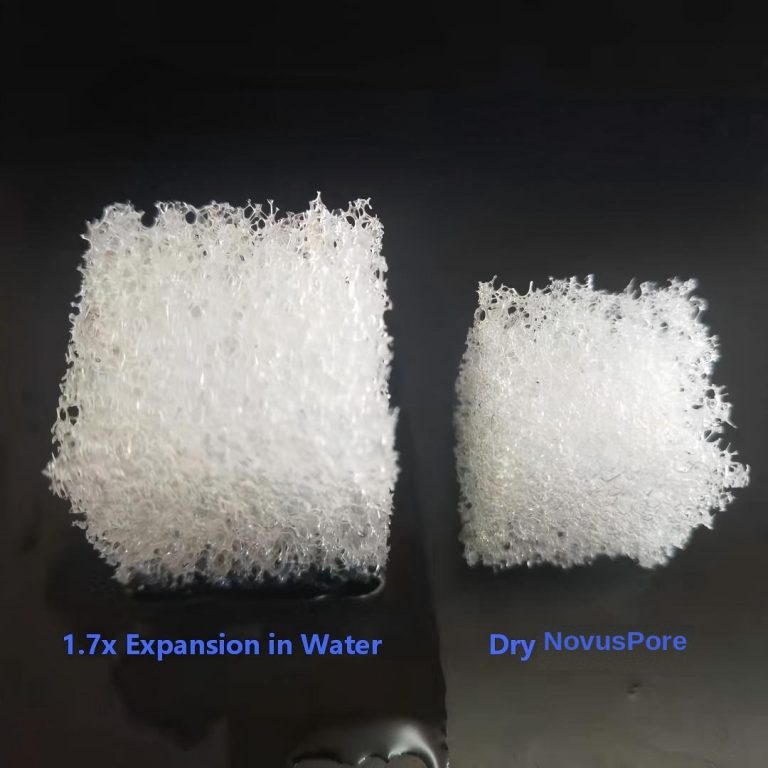
Do not compare a plastic carrier’s surface area with a sponge’s surface area as if they were the same measurement. They are measured differently, and a supplier should state the basis — protected surface, test method, and what the figure includes — in the quotation itself. Ask for that basis in writing, for every model quoted. And ask the practical questions: does it float or sink in your water, how is it packed, and how much does the volume change on unpacking — vacuum-packed sponge, for example, expands about 1.7 times, and 500 m³ fits a 40HQ container, which changes your freight completely. For the technical side of the sponge-versus-plastic choice in a RAS retrofit, see the comparison on our sister site: HPU sponge versus HDPE MBBR media for RAS retrofit.
7. Quantity basis and a trial first
Ask the supplier to state how the quoted volume was reached — what volume of media, at what fill ratio, and what it is based on. A quotation that says “10 m³” without saying why is not comparable with one that says “10 m³ at a stated fill ratio for your tank volume.” And before a full fill, ask for a trial volume. A small quantity — enough for one tank or one chamber — lets you check buoyancy, movement, retention, and handling in your own water before you commit. The sample policy is simple: a small pack, freight discussed up front, one trial, no obligation to take the full volume if the trial does not behave.
What to check in the quotation you receive
| Quote line | What it should state | Red flag |
|---|---|---|
| Media model | Exact model, e.g. MBBR37, MBBR64, or NovusPore HPU | “MBBR media” with no model |
| Surface-area basis | Protected surface area and how it is measured | A surface-area figure with no basis |
| Material | 100% virgin HDPE, density 0.96–0.98 (plastic); PU sponge, porosity over 98% (sponge) | “HDPE” or “sponge” with no material statement |
| Buoyancy | Floats or sinks in fresh and in salt water | No buoyancy statement at all |
| Volume and fill ratio | Cubic metres, and the fill ratio it assumes | A lump sum with no volume |
| Retention check | Written confirmation the media cannot pass your screens | No mention of your screens |
| Packing and freight | Bags of 0.1 m³, container loading, freight term | Freight missing or “to be confirmed” |
| Lifespan and warranty | Service life and what the warranty covers, in writing | Lifespan claimed with no warranty behind it |
If a line is blank, that is a question to the supplier, not a saving. In a RAS, the cheapest media that does not stay in the biofilter is the most expensive media you will buy.
What to send HNS for a quotation
Send us the checklist above, in any format — an email, a filled form, or a short note with a photo of your biofilter tank:
- System type, species, and biofilter tank volume; new build, first fill, top-up, or replacement
- Stocking and feeding level the biofilter serves
- Fresh or salt water, and the temperature range
- Aeration and mixing you already have, including any dead spots
- Retention screens: size, material, and type
- Which media you are comparing, and whether you want a trial volume first
- Delivery location and any import or port requirements
Tell us what is in the biofilter now and what you want to change. We will confirm the model, the volume, and the retention check against your system first — then we quote. Send HNS your RAS biofilter data and we will come back with a quotation built on your system, not on a catalogue page.