Your packaged sewage treatment plant is running. Four months in, a diffuser membrane tears. The plant still runs, but aeration is uneven and the effluent starts to slip. The spare membrane is not on site. It takes three weeks to order, ship and clear customs — three weeks in which a part that costs very little decides how well a plant that cost a great deal performs.
That is the whole argument for ordering spares with the plant instead of after the first breakdown. Spares are cheapest travelling in the same shipment as their equipment, and most useful already on your shelf the day something wears out. This article lists the spares to ask for, equipment by equipment, and how to put them in your order so the list is priced, packed and documented before the plant leaves the factory.
What counts as a spare — and what does not
Not everything that wears out is a spare you should stock. Three groups matter for a packaged plant order.
Wear parts are the items designed to be replaced on a schedule: diffuser membranes, blower inlet filters, dosing-pump diaphragms, scraper blades. They will need replacing during the first years of operation, and the only question is whether the replacement is already on your shelf when the time comes.
Breakdown spares are the items that rarely fail but stop the plant when they do: a spare blower belt set, a spare dosing-pump head, a spare air-release valve. You may never use them. If you need one and do not have it, the plant waits for a shipment.
Consumables are the items you use up in normal operation: polymer or coagulant for dosing, lubricating oil for the blower, cleaning chemicals. These are usually bought locally and do not belong in the spares list, but the supplier should tell you the grades and quantities the plant needs so you can source them before start-up.
Keep the three groups separate in your order. A spares list that mixes them up is a list nobody can price or check.
The spares list, equipment by equipment
Ask your supplier for a priced spares list broken down by equipment, not one lump sum called “spares”. The table below is the starting point; your supplier should confirm, correct or add to it for your exact configuration — if a supplier cannot produce this list, that says something about how well they know their own equipment.
| Equipment | First-year spares to ask for | Ask the supplier to state |
|---|---|---|
| Fine bubble diffusers | Replacement membranes (EPDM or silicone, matching your discs or tubes), retaining rings, gaskets | Membrane material and disc/tube size; how many membranes per diffuser |
| Blower | Inlet filter elements, belt set, lubricating oil grade and quantity | Filter change interval; oil type the blower actually takes |
| Dosing pumps | Diaphragms, suction and discharge valves, seal kits | Which parts are pump-specific and cannot be bought locally |
| Rotary drum screen / filter | Spray nozzles, screen panel sections, drive belt or chain parts | Screen mesh size; which parts are custom to the drum |
| DAF unit | Scraper blades, air-release valve internals, saturator spares | Which parts are wear items and which are breakdown spares |
| Screw press | Wear parts named by the supplier, seals, drive spares | The supplier’s own wear-part list for the model quoted |
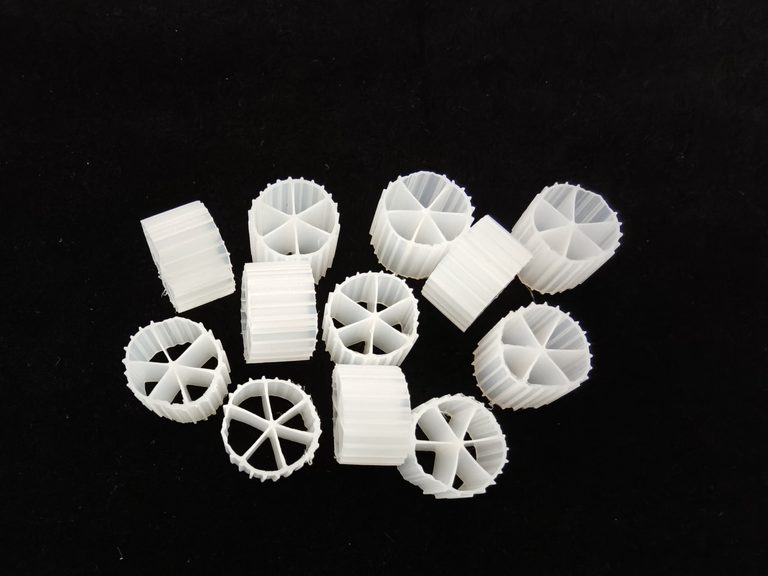
| MBBR media | A small top-up quantity of the same model | The model and volume, so the top-up matches what is in the tank |
| Controls and instruments | Fuses, a spare level switch or sensor of each type fitted | Which sensors are plant-specific and their lead time |
Two lines in that table deserve emphasis. First, the MBBR media top-up: media is packed at 0.1 cubic metres per bag, and a small extra quantity of the same model, ordered with the plant, covers the media lost during the first year of operation and the first screen cleaning. Ask for it by model and volume, exactly as the main media line is written. Second, the instrument spares: a level switch or a sensor with a six-week lead time is the part that will stop your plant while a membrane that you stocked sits unused. Ask the supplier for the lead time of every sensor and switch fitted, and stock the ones you cannot buy locally.
How much to order, and how to price it
There is no standard percentage for spares, and any supplier who quotes you a fixed percentage of the plant price without listing the parts is selling you a number, not a spares package. Order by the list instead.
Ask the supplier to recommend first-year quantities for each wear part, in writing, with the reason: expected running hours, the plant’s duty pattern and the part’s normal service interval. Then check the recommendation against your own situation. A plant running twenty-four hours a day in a remote location needs more stock than a plant running eight hours a day next to a supplier’s warehouse. A plant with two identical treatment lines can share some spares between the lines; a plant with one line cannot.
Price the spares as a separate section of the quotation, with a price per item, not a single total. That lets you compare the spares cost between suppliers, drop the items you can source locally, and keep the items only the original supplier can provide. It also lets you check the spares price against the equipment price — a membrane that costs a large fraction of a whole diffuser is a membrane worth questioning.
Ask about shelf life and storage before you order, not when you open the box a year later. Membranes, seals and diaphragms age on the shelf as well as in service. Ask the supplier how each spare should be stored, how long it keeps, and whether any spare needs to be kept out of sunlight or away from heat. A spare that has perished in storage is not a spare.
Ordering, packing and paperwork
Order the spares with the plant — once the scope in our packaged plant scope checklist is fixed — in the same order, for three practical reasons. First, they can travel in the same shipment, which is usually cheaper and always simpler than a separate small shipment later. Second, they are manufactured and checked with the plant, so the parts match the equipment as built rather than as drawn. Third, the spares are covered by the same order documents, warranty terms and inspection — our guide to payment terms, warranty and inspection explains what to put in an equipment order, and the spares section belongs in that same order, not in a side email.
Ask for the spares to be packed separately from the plant equipment, labelled by equipment and part name, and listed on the packing list as their own section. A box marked “spares” with no list inside it is a box nobody will open until the day it is needed, and then nobody will know what is in it. Ask for a spares register as a document: part name, equipment it belongs to, quantity supplied, and the supplier’s part reference. Keep one copy at the plant and one copy in your office.
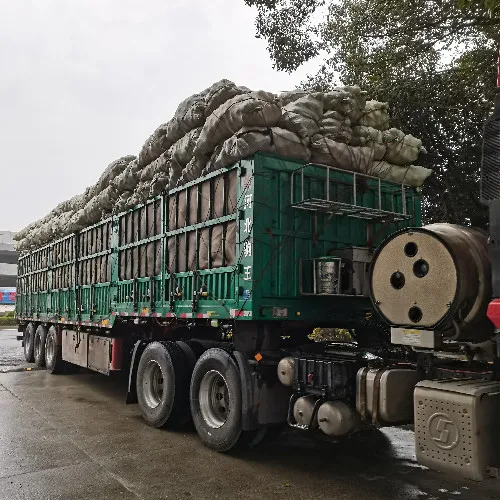
If the plant is going to a remote site — and many packaged plants are — add one more line to the order: the supplier’s recommended critical-spares kit for the first year at that location, and the lead time for anything not in the kit. The point of the exercise is that the plant keeps running while a replacement is on its way, not that the shelf is full.
What to send HNS for a spares quotation
If you want HNS to price the spares with your plant, send us the configuration that decides the list: the equipment in the package, the expected running hours, whether the site is staffed around the clock, how far the site is from the nearest supplier, and whether the plant has one treatment line or two. Tell us which spares you can source locally and which you need from us, and we will return a priced list by equipment so you can compare it line by line instead of accepting a lump sum.
HNS manufactures the media and the wastewater treatment equipment in our own factory in Yixing, so the spares we quote are the parts fitted to the equipment we build, under the same order and the same warranty terms. We supply media and equipment packages, not whole-plant process design, civil works, commissioning or operation, and we will say so plainly if your project needs those services from another party.
A shelf of spares is the cheapest insurance a plant has
Nobody remembers the spares order when the plant starts up. Everybody remembers it the first time a small part stops a large plant. Order the wear parts for the first year, the breakdown spares you cannot buy locally, and a small top-up of media — priced by item, packed separately, listed on the packing list, and stored where the operator can reach them. It is a small addition to a plant order and the difference between a one-hour fix and a three-week wait.
Send your plant configuration to HNS and we will price the spares list with the plant. Use the contact page, include the running hours, site location and equipment list, and we will return the spares as a priced section of the same quotation.