Municipal sewage arrives at a treatment plant more or less balanced. It carries carbon, nitrogen and phosphorus in roughly the proportions bacteria need to grow, because it comes from people. Industrial wastewater often does not. A paper mill, a food factory, a chemical plant or a textile dyehouse can send water that is rich in carbon and almost empty of nitrogen or phosphorus — and a biological process fed on that water will stall, no matter how good the media is.
This is one of the most common reasons an MBBR system underperforms in industrial applications. The carriers are fine. The aeration is fine. The biofilm simply cannot grow, because it is missing a nutrient the wastewater does not contain. The fix is usually cheap — a dosing system for a nitrogen or phosphorus source — but only if the shortage is found before the plant is built, and only if the dosing is specified as part of the order rather than bolted on afterwards.
This article explains how to tell whether your wastewater is short, what data to send a supplier, and what to put in the order so the dosing system is right the first time.
The buying problem: the media is not the bottleneck
When an industrial MBBR underperforms, the first suspicion usually falls on the media: wrong surface area, wrong fill ratio, wrong carrier. Sometimes that is the cause. But if the wastewater is nutrient-deficient, no media choice will fix it. Bacteria build their cells from carbon, nitrogen and phosphorus in fixed proportions. Give them carbon without nitrogen and they cannot make protein. Give them carbon without phosphorus and they cannot make the energy-transfer molecules every cell needs. The biofilm stays thin, the removal stalls, and the plant looks like it has a media problem when it has a chemistry problem.
The textbook ratio most designers start from is BOD:N:P of 100:5:1 — one hundred parts of biodegradable organic matter to five parts nitrogen to one part phosphorus. That is a rule of thumb, not a dose. The real requirement depends on the wastewater, the treatment target, and how much biomass the process has to grow and waste. But the ratio is a useful first check: if your wastewater has a BOD of 1,000 mg/L and almost no nitrogen, the shortfall is not subtle, and it should be caught at the inquiry stage, not after commissioning.
The practical consequence for a buyer is simple: nutrient dosing is part of the MBBR package for many industrial wastewaters, and it should be priced and specified with the media, not discovered later as an extra.
What actually decides it: four checks before you order
1. What the wastewater actually contains
The check starts with analysis, not with a catalogue. A basic influent characterisation — BOD or COD, total nitrogen, ammonia, total phosphorus, and pH — is enough to spot a gross deficiency. Compare the measured nitrogen and phosphorus against the organic load using the 100:5:1 rule of thumb as a first screen. If the numbers are far off, the wastewater is nutrient-short, and the supplier needs to know before quoting media.
This is where many industrial inquiries go wrong: they send flow and COD, but not nitrogen and phosphorus. A quotation prepared from flow and COD alone assumes the wastewater is balanced, and for industrial water that assumption is frequently wrong. Send the full analysis. If you do not have one, say so — a supplier can tell you which analyses to run, and the cost of the analysis is trivial next to the cost of a system that cannot grow biofilm.
2. Whether the shortage is constant or intermittent
Some industrial wastewaters are always short of the same nutrient. Others swing: a food factory’s water is nutrient-rich on production days and nutrient-poor on cleaning days; a chemical plant’s water changes with the product campaign. The distinction matters because it decides the dosing system.
A constant shortage can be handled with a fixed dosing rate, set once and checked occasionally. An intermittent shortage needs a dosing system that can respond — a flow-paced or load-paced pump, and ideally a control signal from the process. That is a more expensive system, and it is also the one most often missing from the original order, because the intermittency was never mentioned in the inquiry. If your load varies, say how it varies. The dosing system is designed around the variation, not the average.
3. Which nutrient source, and what it does to the rest of the plant
Nitrogen is usually dosed as urea or ammonia; phosphorus as phosphoric acid or a phosphate salt. Each choice has consequences beyond the nutrient itself. Urea adds nitrogen without adding alkalinity. Phosphoric acid adds phosphorus and lowers pH. Ammonia dosing raises the ammonia load the biology has to remove. None of these is a reason not to dose — they are reasons to choose the source deliberately, with the pH and alkalinity of the whole process in mind.
This is also where nutrient dosing meets the other dosing question in MBBR operation: alkalinity. Nitrification consumes alkalinity, and a plant that doses nutrients without checking alkalinity can trade one deficiency for another. The dosing scope in your order should cover the nutrient source and the alkalinity check together, not as two separate afterthoughts. For the alkalinity side of the calculation, see the HydroNovus technical guide linked below.
4. How the dose will be controlled and verified
A dosing pump without a control and verification routine is a liability. The dose must be set from the measured load, not from a fixed guess, and it must be checked against the treated effluent: residual nitrogen and phosphorus in the outlet tell you whether the dose is right, too high, or too low. Overdosing is its own problem — excess phosphorus in the effluent can breach a discharge consent just as surely as a nutrient shortage can stall the biology.
So the order should specify three things: the dosing pump and storage, the control logic (manual, flow-paced, or load-paced), and the monitoring points (influent and effluent nitrogen and phosphorus, and pH). A supplier who quotes a pump without asking about control logic has quoted half a system.
What to send HNS for a quotation
A nutrient dosing question cannot be answered from a flow rate alone. Send these six items, and the answer you get back will be a real scope rather than a generic pump price:
- Influent analysis — BOD/COD, total nitrogen, ammonia, total phosphorus, pH, and temperature, as measured. Include the range, not just the average.
- Flow pattern — average and peak flow, and how the load varies across the day and the week.
- Discharge targets — COD, BOD, ammonia, total nitrogen and total phosphorus limits the plant must meet.
- Existing treatment — what is already in place, and whether any dosing exists today.
- Available chemicals on site — whether urea, ammonia or phosphoric acid is already stored or handled, and what storage exists.
- Space and power — where a dosing skid would sit, and what power and water connections are available.
With those six, a supplier can confirm whether dosing is needed, which nutrient source fits your plant, how the dosing should be controlled, and what it costs as part of the MBBR package. Without them, any nutrient quotation is a pump price attached to a guess.
The mistake to avoid
The expensive mistake is ordering the MBBR system first and discovering the nutrient shortage at commissioning, when the biofilm will not grow and the discharge consent is already running. At that point the dosing system is an emergency purchase: a pump bought in a hurry, installed without proper storage or control, and dosed by trial and error while the plant is already supposed to be compliant.
Nutrient dosing is not a complicated purchase. It is a pump, a tank, a control signal and a monitoring routine. But it has to be part of the original order, sized from the real wastewater analysis, or it becomes the most expensive cheap item in the plant.
Check the nutrients before you order the media. The media will work better, the quotation will be honest, and the commissioning will be shorter — because the biology will have everything it needs from the first day.
Next step: send HNS the six items above through the contact page and ask for an MBBR quotation that includes a nutrient dosing scope, with the nutrient source and control logic stated. If your influent analysis shows a large nitrogen or phosphorus shortfall, say so plainly in the inquiry — it changes the recommendation, and it is the single most useful piece of information you can send.
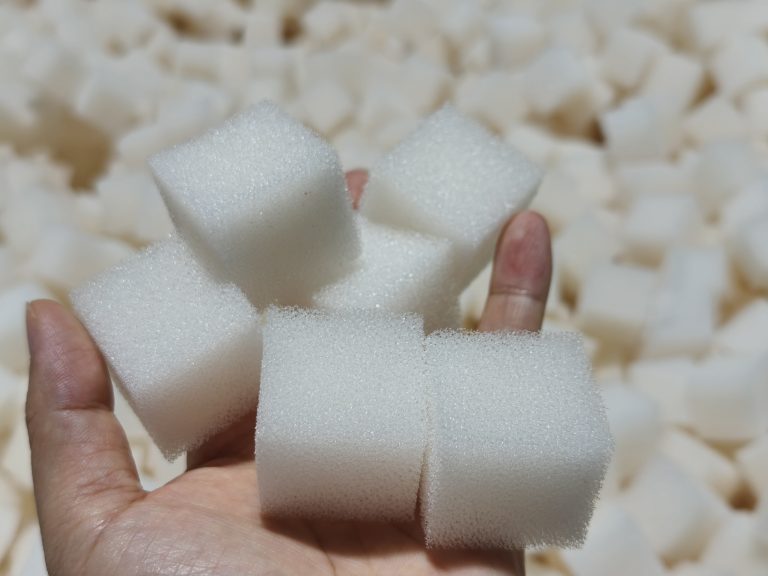
Related reading: our MBBR system and MBBR media pages carry the verified carrier figures used here, and NovusPore sponge media covers the high-surface-area option for volume-limited tanks.
Technical companion: MBBR Alkalinity Consumption, Nitrification and Dosing Calculation (HydroNovus).