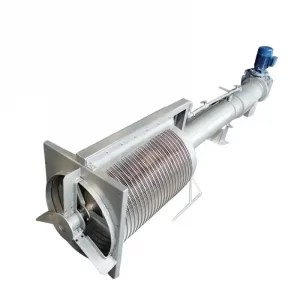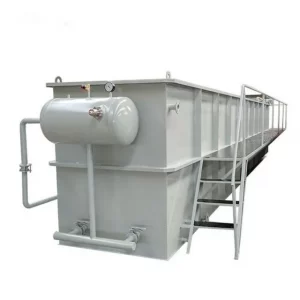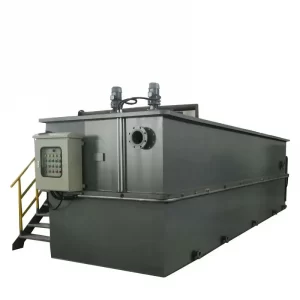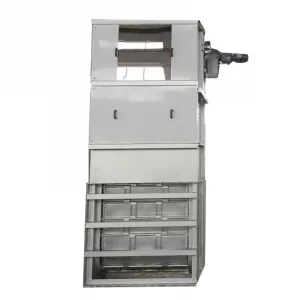
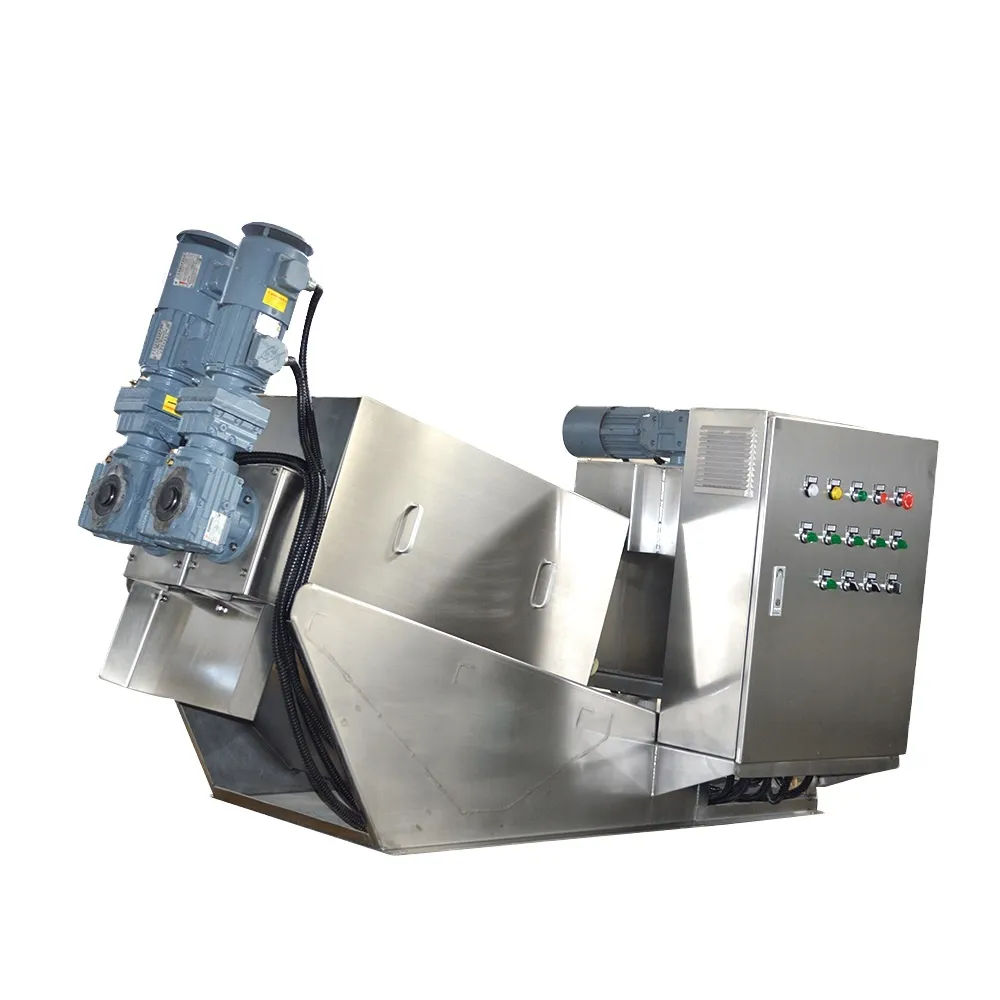
Volute Screw Press for Sludge Dewatering
Vitae purus faucibus ornare suspendisse sed. Sapien et ligula ullamcorper malesuada proin libero nunc consequat.
Contact us to get !
- Free design suggestions
- Product Technical details
- Full product catalog
HNS manufactures volute screw press systems for municipal and industrial sludge treatment projects. Each unit can be configured according to the sludge source, feed solids concentration, dry solids load, operating schedule, conditioning requirements and required cake condition.
A sludge dewatering machine should not be selected from wet sludge flow alone. Two projects with the same feed flow may require very different equipment when their solids concentrations, sludge characteristics or operating hours are different.
How the Volute Screw Press Works
Before entering the dewatering section, the sludge is normally mixed with a suitable conditioning agent to form flocs that release water more readily.
The conditioned sludge enters the filtration cylinder, which consists of a screw shaft surrounded by alternating fixed and moving rings. As the screw rotates at low speed, it conveys the sludge toward the discharge end while gradually increasing pressure.
Water passes through the gaps between the rings and is collected as filtrate. The concentrated solids continue through the screw and leave the machine as dewatered sludge cake.
The movement between the fixed and moving rings is designed to reduce solids accumulation in the filtration gaps. Actual cleaning frequency and operating performance still depend on the sludge characteristics, conditioning and operating conditions.
Suitable Sludge and Project Conditions
A volute screw press may be considered for municipal and industrial sludge streams where continuous mechanical dewatering and compact equipment are required.
Possible applications include:
- Municipal biological sludge
- Industrial biological sludge
- Food and beverage wastewater sludge
- Chemical precipitation sludge
- DAF float sludge
- Livestock and agricultural wastewater sludge
- Septic and decentralized wastewater sludge
Suitability should be confirmed from actual project data. Biological, chemical, oily, fibrous and mineral sludges can behave differently during flocculation and dewatering.
For unfamiliar or difficult sludge, jar testing, flocculation testing or a sample evaluation may be required before the final equipment configuration is confirmed.
Sludge Source and Characteristics
The source of the sludge affects its settling, flocculation and water-release characteristics.
Waste activated sludge can contain fine biological particles and bound water. Chemical sludge may contain inorganic precipitates. DAF sludge may contain fats, oils or lightweight solids. Fibrous sludge may form a stronger drainage structure but can also affect pumping and conveying.
This is why the sludge source and treatment process should be identified before model selection.
Feed Concentration and Dry Solids Load
Wet sludge flow describes the hydraulic load, but it does not show how much solid material the machine must process.
The preliminary dry solids load can be estimated from:
Dry solids load (kg DS/h) = sludge flow (m³/h) × solids concentration (kg/m³)
For example, 5 m³/h of sludge at 0.2% solids represents a very different loading from 5 m³/h at 2% solids.
Very dilute sludge may create excessive hydraulic loading relative to the quantity of dry solids. In these cases, pre-thickening should be evaluated before final dewatering. Low-Concentration Sludge Thickening Before Dewatering
Polymer Conditioning
Polymer conditioning is commonly used to form stronger flocs and improve water release before the sludge enters the screw press.
Polymer type and dosage should not be selected from the equipment model alone. They depend on the sludge composition, solids concentration, pH, temperature and required filtrate and cake conditions.
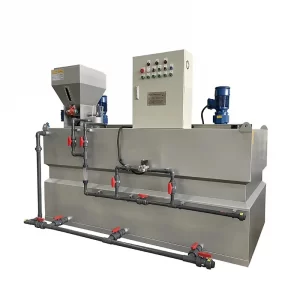
A polymer preparation and dosing system can be supplied as part of the sludge dewatering line. Where test data are available, HNS can review the conditioning requirements together with the equipment configuration.
Equipment Configuration and Model Selection
A complete volute screw press system may include:
- Sludge feed pump
- Polymer preparation and dosing unit
- Flocculation or mixing tank
- Volute screw press
- Filtrate collection section
- Electrical control cabinet
- Sludge cake conveyor
- Platforms, piping and accessories
The required scope depends on whether the customer needs a single machine, a skid-mounted package or equipment that will be integrated into a larger wastewater treatment system.
HNS can configure materials, dimensions, electrical requirements, control functions and accessories according to the approved project specifications.
Technical Specifications
The model should be selected according to dry solids load, feed concentration, sludge characteristics, operating hours and required equipment scope.
Published capacity data are intended for preliminary comparison. Final selection should be confirmed against the actual sludge and project conditions.
| Model | DS Sludge Treating Capacity | 10000mg/L | 20000mg/L | 30000mg/L | 40000mg/L | 50000mg/L |
|---|---|---|---|---|---|---|
| HL101 | 5-7kg/h | ~0.5m3/h | ~0.25m3/h | ~0.2m3/h | ~0.15m3/h | ~0.14m3/h |
| HL131 | 10-14kg/h | ~1m3/h | ~0.5m3/h | ~0.4m3/h | ~0.3m3/h | ~0.28m3/h |
| HL201 | 15-20kg/h | ~1.5m3/h | ~0.75m3/h | ~0.6m3/h | ~0.5m3/h | ~0.4m3/h |
| HL202 | 30-40kg/h | ~3m3/h | ~1.5m3/h | ~1.2m3/h | ~1.0m3/h | ~0.8m3/h |
| HL203 | 45-60kg/h | ~4.5m3/h | ~2.25m3/h | ~1.8m3/h | ~1.5m3/h | ~1.2m3/h |
| HL301 | 50-70kg/h | ~5m3/h | ~2.5m3/h | ~2m3/h | ~1.5m3/h | ~1.4m3/h |
| HL302 | 100-140kg/h | ~10m3/h | ~5m3/h | ~4m3/h | ~3m3/h | ~2.8m3/h |
| HL303 | 150-210kg/h | ~15m3/h | ~7.5m3/h | ~6m3/h | ~4.5m3/h | ~4.2m3/h |
| HL304 | 200-280kg/h | ~20m3/h | ~10m3/h | ~8m3/h | ~6m3/h | ~5.6m3/h |
| HL351 | 100-120kg/h | ~10m3/h | ~5m3/h | ~4m3/h | ~3m3/h | ~2.4m3/h |
| HL352 | 200-240kg/h | ~20m3/h | ~10m3/h | ~8m3/h | ~6m3/h | ~4.8m3/h |
| HL353 | 300-360kg/h | ~30m3/h | ~15m3/h | ~12m3/h | ~9m3/h | ~7.2m3/h |
| HL354 | 400-480kg/h | ~40m3/h | ~20m3/h | ~16m3/h | ~12m3/h | ~9.6m3/h |
| HL401 | 130-160kg/h | ~13m3/h | ~6.5m3/h | ~5m3/h | ~4m3/h | ~3.2m3/h |
| HL402 | 260-320kg/h | ~26m3/h | ~13m3/h | ~10m3/h | ~8m3/h | ~6.4m3/h |
| HL403 | 390-480kg/h | ~39m3/h | ~19.5m3/h | ~15m3/h | ~12m3/h | ~9.6m3/h |
| HL404 | 520-640kg/h | ~52m3/h | ~26m3/h | ~20m3/h | ~16m3/h | ~12.8m3/h |
Information Required for Selection
For a preliminary equipment review, please provide:
- Sludge source and wastewater industry
- Average and peak sludge flow
- Feed solids concentration
- Daily operating hours
- Available sludge analysis or test results
- Existing thickening or conditioning process
- Polymer information, if available
- Required cake condition
- Filtrate discharge or return point
- Available installation space
- Power supply
- Required material and control scope
If the solids concentration is unknown, provide the available TSS, total solids or laboratory analysis together with the sampling method.
Frequently Asked Questions
Can the machine be selected from sludge flow alone?
No. Sludge flow only represents the hydraulic volume. Feed solids concentration and dry solids load are also required for preliminary model selection.
Does every project require sludge thickening before the screw press?
No. Pre-thickening may or may not be required. It should be evaluated according to feed concentration, hydraulic load, sludge characteristics and the required final treatment result.
Can a volute screw press treat every type of sludge?
No single dewatering technology is suitable for every sludge. The sludge source, particle characteristics, conditioning behavior and required cake condition should be reviewed before confirming suitability.
Is polymer always required?
Many sludge streams require conditioning before screw press dewatering, but the appropriate polymer and dosage depend on the sludge. Testing may be necessary.
Can HNS supply a complete sludge dewatering package?
HNS can manufacture and supply the volute screw press together with applicable dosing, flocculation, pumping, conveying, control and accessory systems. The final supply scope should be defined from the project specifications.
What information is needed for a quotation?
Please provide the sludge source, average and peak flow, feed solids concentration, operating hours, available analysis, required cake condition and the equipment scope. Providing only the wastewater treatment plant capacity is normally not enough for accurate selection.
Request a Preliminary Selection
Send us your sludge source, average and peak flow, feed solids concentration, operating hours, available test results and required cake condition.
HNS will review the dry solids load, conditioning requirements and applicable equipment configuration before recommending a preliminary model.