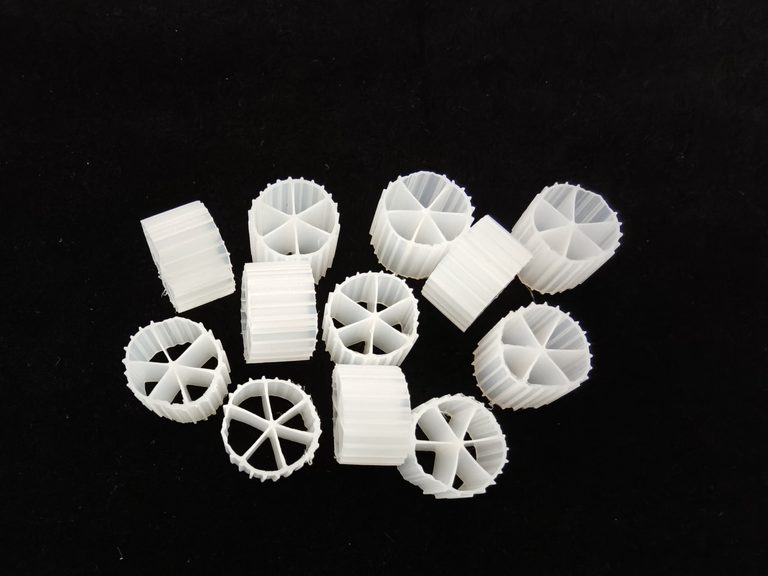
Sponge media usually does not fail slowly. It fails early. A buyer puts new cubes in, the system runs, and a few months later the media has shrunk, gone soft at the edges, or started breaking up. The supplier blames the water. The buyer blames the sponge. Neither answer helps the next order.
The honest starting point: sponge lifespan is not one number. It depends on the duty, the material and density, and what runs through it. A cube floating in a moving bed has an easy life. The same cube tumbling inside a rotating drum, rubbing a screen and hundreds of other cubes, works much harder. Buyers who ask “how long does sponge media last?” get a brochure answer. Buyers who describe their duty first get a useful one.
This guide is about the buying side of sponge life: why sponge shrinks or wears out early, the questions that separate a real lifespan claim from a sales line, and what to get in writing before you pay.
First, separate the two ways sponge dies
Buyers lump two different problems together. It helps to keep them apart, because they have different causes and different fixes.
- Shrinkage. The cubes come out smaller than they went in. The media still looks like sponge, but the fill volume has dropped and the pieces no longer fill the space they were bought for. Shrinkage is usually a material question: the foam was not made, or not specified, for continuous wet service under load.
- Wear. The cubes lose their edges, shed crumbs, or split. The volume is roughly there, but the pieces are breaking down. Wear is usually a duty question: something in the service is grinding, squeezing, or attacking the sponge faster than it can stand.
A supplier who hears “it shrank” and answers with a harder sponge may be solving the wrong problem. Describe what you actually saw — smaller, softer, crumbling, or all three — and when it started.
Why sponge wears out early: the buying-level causes
You do not need the chemistry to buy better. You need to know which decisions, made at order time, decide how long the sponge lasts.
The duty was never described
This is the most common cause, and it is a purchasing failure, not a product failure. Sponge sold for a gentle moving bed gets quoted for a rotating drum because the buyer asked for “sponge media, 30 mm cubes” and nothing more. In a drum, the media tumbles, rubs the drum wall and the retention screen, and gets squeezed through the same cycle thousands of times. That service needs a tougher specification than a floating bed does. If the supplier never heard the word “drum”, the quote was written for an easier life than the one your media will live.
The material and density were never specified
“PU sponge” is a family, not a specification. Foams differ in density and in how they hold up in water over years, and two cubes that look identical on a desk can age very differently in a tank. If the purchase order says nothing about material or density, the supplier is free to ship whatever is on the shelf — and the cheapest foam on the shelf is rarely the one that lasts. Density is also the figure a buyer can actually check, which is why it belongs in writing (more on that below).
The load was too much for the pieces
Sponge media works by being squeezed and released as it moves — that pumping is what makes it useful. But a fill packed too tight, or pieces loaded so they are crushed rather than tumbling, wears faster and treats worse. This is partly an operating question, but it starts at buying: order the volume for the duty you described, not a cheaper volume stretched to fill the space.
The water carries things sponge does not like
Strong solvents, oils in quantity, and harsh cleaning chemicals attack foam. If your process water carries them, or your cleaning routine uses aggressive chemicals on the media, say so before you order — not after the first batch softens. A supplier who knows the exposure can tell you honestly whether sponge is the right media for that stream at all. Sometimes it is not, and hearing that before the order is worth more than a warranty claim after it.
What a realistic lifespan claim looks like
For our NovusPore sponge media, the working figure is this: in normal biofilm service, expect to top up or replenish only after about five years, not every season. The media carries a protected surface area above 5,000 m²/m³ (BET method), porosity above 98%, and biofilm forms in about 3–7 days.
Read that claim the way you should read any supplier’s claim, including ours:
- It is tied to a duty. “Normal biofilm service” means a moving bed or similar duty in municipal or industrial wastewater. It is not a promise for every drum, every chemical stream, or every cleaning regime.
- It says “replenishment”, not “replacement”. Sponge systems are normally topped up — a portion replaced — rather than stripped out and refilled. Ask any supplier whether their lifespan figure means full replacement or partial replenishment. The cost difference over ten years is large.
- It can be checked against a sample. A claim you cannot test is marketing. A claim you can run in your own drum for a season is a specification.
If a supplier quotes you ten or fifteen years for sponge in hard service, ask what the figure is based on. If the answer is a brochure from another application, you have learned something important about the supplier.
The questions to ask before you order
Ask these in writing, and keep the answers with the purchase order:
- What material and density is this sponge, exactly? Not “high quality PU” — the material name and the density figure, so the delivery can be checked against it.
- What size are the pieces after soaking? Sponge is often cut and packed dry or vacuum-packed. Our sponge ships vacuum-packed — 500 m³ to a 40HQ container — and expands about 1.7 times when the pack is opened. Ask any supplier for the working size and volume after unpacking and wetting, because that is the volume you are actually buying.
- What duty is your lifespan figure based on? Moving bed, drum, or something else — and in what kind of water?
- What does replenishment look like in year five? What share of the fill would you expect to top up, and at what notice?
- What voids your support? Every supplier has limits — chemicals, temperatures, duties. A supplier who states them plainly is easier to deal with than one who promises everything and disputes it later.
What to get in writing
Verbal lifespan talk is worth nothing in month eight. Before you pay, the order paperwork should carry:
- The material and density specification.
- The piece size and the volume basis (packed, expanded, or in-service).
- The duty the quotation was written for — your words, from your enquiry.
- The replenishment expectation, stated as the supplier’s normal experience, not buried in a brochure.
- What happens if the media shrinks or breaks down early in the stated duty: inspection, replacement of the affected portion, or credit. You may not get a long warranty on a consumable — but you can get the conversation agreed before the money moves.
Why a sample run settles what brochures cannot
Sponge is the easiest media to test honestly. A small quantity, run in your own water and your own equipment, shows shrinkage and wear faster than any datasheet argument. If your previous sponge shrank in months, a trial in the same drum is the one test that matters — the new material faces the exact service that killed the old one.
That is why we would rather sell a small first order to a buyer with a hard duty than a container to a buyer who has not tested. Our guide to ordering a trial before the bulk order sets out how to structure that first purchase so the result decides the big one.
One honest alternative belongs in this guide too. For some small systems, the real choice is not which sponge, but sponge-core media versus all-plastic balls. The two age differently and suit different duties. The technical comparison sits on our sister site: sponge core vs plastic bio balls for small systems. And if your duty turns out to be wrong for sponge altogether, our plastic MBBR carriers are the other direction — rigid HDPE pieces with a catalogue service life above 15 years.
What to send HNS for a sponge media quotation
Send us the duty first: moving bed, rotating drum, or another arrangement. Then the working volume you need to fill, the piece size you are using now (and what happened to it, if it failed), and anything harsh in the water or the cleaning routine. If you have a previous media that shrank or wore out, say when it started — that timing tells us more than the brand name does.
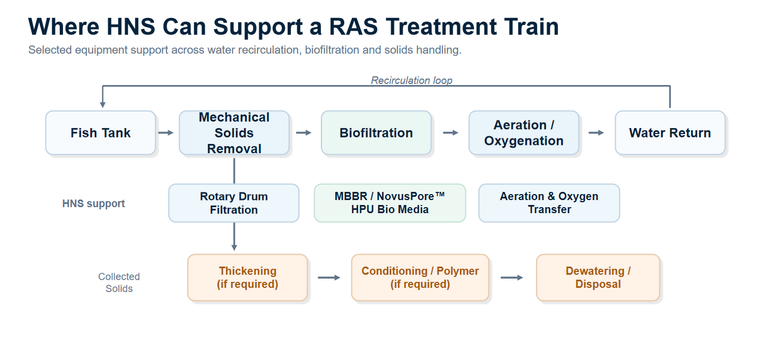
We manufacture the NovusPore sponge media and the MBBR carrier range at our own factory in Yixing. We supply media and equipment packages — not whole-plant process design, civil works, commissioning, or operation. Send the details through our contact page, and we will quote against the duty you describe, with the material, density and size basis stated in the offer — so the lifespan conversation is on paper before the order, not after it.