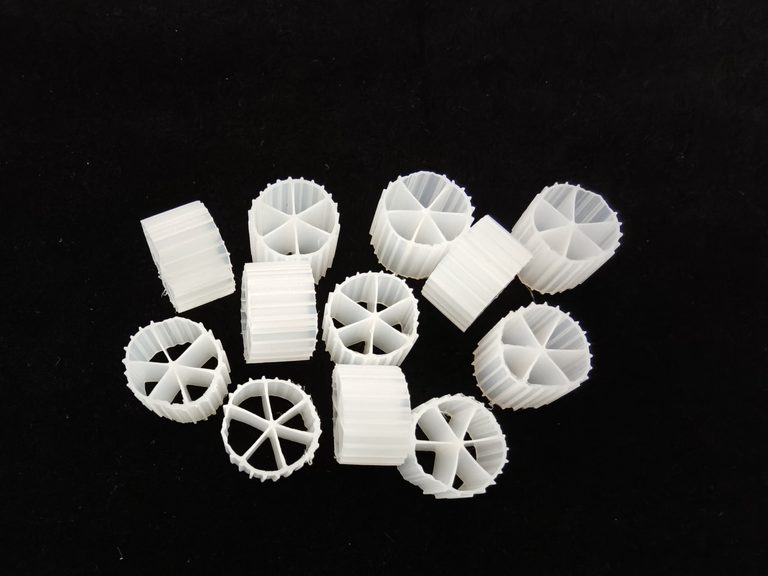
A distributor in Brazil received one cubic metre of MBBR media as a test sample. The project behind it was estimated at about 2,200 cubic metres — a reseller order two thousand times the size of the sample. The sample was sent in April 2026. Since then, no test result has come back.
Nothing about this story is unusual. It is, in fact, the most common way a large media order dies: not with a rejection, but with silence. The sample goes into a tank, the trial runs — or does not run — and nobody writes anything down. Months later, the supplier follows up and the distributor has nothing to report, the end customer has moved on, and the project has quietly gone to another supplier or another technology.
The problem is not the media. The problem is that a trial was started without a record. A media trial for a reseller project is not a test of whether the media works — that was settled long before the sample shipped. It is a test of whether the media works in this customer’s water, in this customer’s tank, against this customer’s discharge limit. That test only produces a decision if somebody records what was done, what was measured, and what the result was. Without a record, the trial produces an opinion. With a record, it produces an order.
The buying problem: a sample without a record is a free sample
A one-cubic-metre sample is cheap for the supplier and expensive for everyone if it produces nothing. The supplier’s cost is the media and the freight. The distributor’s cost is the tank time, the labour, and the credibility spent telling an end customer that this media is worth testing. If the trial ends without a record, both sides have spent that money and learned nothing.
The record is what converts the sample from a cost into evidence. It does three jobs at once. First, it tells the end customer whether the media met the discharge limit in their water — the only question that matters. Second, it tells the supplier what to quote for the full order: which media, how much of it, and what the trial proved about the water. Third, it gives the distributor something to show the next customer: a real trial, in real water, with real numbers.
None of this needs laboratory equipment. It needs a notebook, a camera, and an agreement made before the sample ships.
What actually decides it: the record has four parts
A trial record that can move a big order has four parts, and each one is simple. The mistake is to treat the trial as one event — “we ran it for a month” — instead of four records kept together.
1. The starting conditions: what the water was, and what the tank was
Before the media goes in, write down the trial as it starts. The influent: flow, and the concentrations that matter for the discharge limit — BOD or COD, ammonia, and total nitrogen if the permit covers it. The tank: volume, existing media if any, aeration arrangement, and temperature. The media: which product, how much of it, and the fill rate in the trial tank.
Two details matter more than the rest. First, the discharge limit the trial is judged against — the number in the permit or the client’s specification, written down before the trial starts, not remembered afterwards. Second, the baseline: how the existing system performed before the new media went in, measured the same way. A trial without a baseline can show improvement, but it cannot prove it.
2. The running log: what happened, week by week
A trial runs for weeks, and memory does not. Keep a short weekly log — one page per week is enough — with the date, the flow, the influent and effluent concentrations for the parameters in the permit, the dissolved oxygen if it is measured, and anything unusual: a production shutdown, a shock load, a power cut, a change in the feed. Unusual events are not failures of the trial; they are the most useful part of it, because they show how the media behaves when conditions change.
Note the biofilm by eye as well as by number. NovusPore sponge media, for example, typically shows biofilm within 3 to 7 days of start-up under normal conditions, and its high protected surface — above 5,000 m²/m³ by BET measurement, with porosity above 98 percent — is why it establishes quickly. HDPE carriers take longer to show visible growth, and the trial record should say so, so that nobody judges a two-week-old HDPE trial by a sponge-media timetable.
3. The result: the numbers against the limit
At the end of the trial, the record needs one page that a buyer can read in a minute: the influent and effluent averages for each parameter, the discharge limit for each parameter, and whether the trial met it. Add the trial duration and the operating conditions during the final week, so the result is tied to the conditions that produced it.
Do not overstate the result. A trial in one tank, at one flow, in one season, proves that the media worked in that tank at that flow in that season. It does not prove a removal percentage for every project, and a supplier who quotes a trial result as a guarantee is making a promise the trial cannot support.
4. The decision: what happens next, and when
The last page of the record is the decision, and it should be written before the trial ends, not after. Three options cover almost every trial: proceed to a full quotation on the tested media; proceed with a change — a different media, a different fill rate, a second trial at a different loading; or stop, with the reason written down. A trial that ends with “we will think about it” has not ended. Put a date on the decision, and name the person who makes it.
The checklist: what to agree before the sample ships
Most of the silence after a trial is agreed in advance — by not agreeing anything. Before the sample ships, put these six points in writing, in an email if not in a contract.
| Agree | What to write down | Why it matters |
|---|---|---|
| What the trial must prove | The discharge limit and the parameters it covers | Without a target, any result can be called a success — or a failure |
| How long it runs | Start date, end date, and the minimum running time | A trial with no end date has no result date |
| What gets measured, and how often | Parameters, sampling points, frequency, and who measures | A result nobody measured is an opinion |
| Who keeps the record | One named person on the distributor’s side, one on the supplier’s | If everyone owns the record, nobody keeps it |
| When results are shared | A date for the interim update and a date for the final result | A trial that reports only at the end can drift for months |
| What happens after the result | Quotation, second trial, or stop — and the date of the decision | This is the sentence that turns a sample into a sale |
If the distributor is testing for an end customer, add one more line: who the end customer is allowed to see. Some end customers will not let their water data leave the plant; some will. Agree it before the trial, not when the supplier asks for the results to quote the next project.
What to send HNS for a quotation
If the trial went well and the full order is next, the trial record is the quotation brief. Send HNS the record itself: the media type and fill rate tested, the flow and concentrations it handled, the discharge limit it met, the trial duration, and the tank volume the full order must fill. Add the full project’s flow and concentrations if they differ from the trial — a trial at one flow does not automatically size a plant at another — and the delivery location and any packing or labelling requirements for a reseller order.
If the trial raised a question — the media worked but the fill rate needs to change, or a second media type should be tested alongside — send the record with the question attached. A supplier who can see the trial data can answer in days.
The bottom line
A reseller project does not fail because the media was wrong. It fails because the trial that was supposed to prove the media produced no record, and no record means no decision. Agree the target, the duration, the measurements and the decision date before the sample ships. Keep a weekly log. End with one page of numbers against the discharge limit and a dated decision. That is all a trial record is — and it is the difference between a sample that becomes a 2,200-cubic-metre order and a sample that becomes a silence.
HNS Watertech manufactures MBBR media, including NovusPore sponge media and HDPE carriers, at our own factory in Yixing, China, and supplies them to distributors, EPC contractors and integrators worldwide. We supply media and equipment packages; whole-plant process design, civil works, commissioning and operation are outside our scope. To request a quotation — or to agree a trial record for a reseller project — send your trial data and project figures through our contact page.
For the technical side of media start-up and biofilm commissioning, see: MBBR Startup and Biofilm Commissioning